Male Pattern Baldness: 7 Early Signs You Need to Catch Now

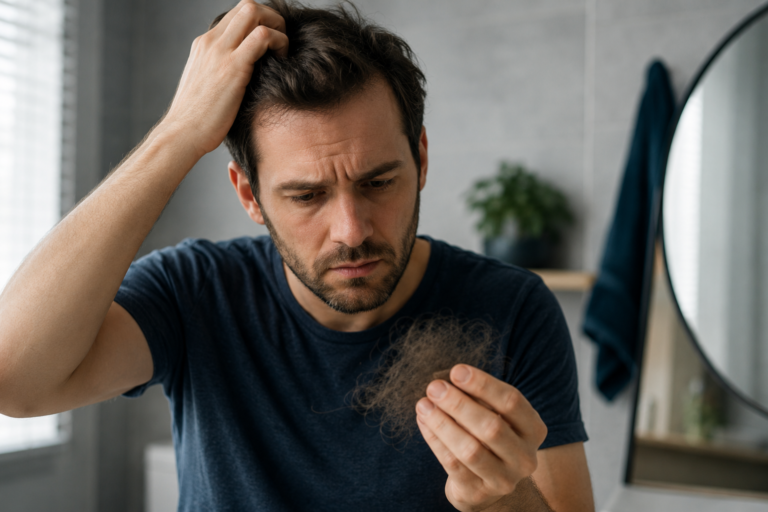
Imagine looking in the mirror while getting ready for work, styling your hair as you have done for years, and suddenly noticing your scalp showing through under the bright bathroom lights. You shift your hairline to the side, hoping it is just a bad angle or poor lighting.
However, a subtle anxiety starts to kick in. You start checking your pillow every morning, scanning the shower drain, and second-guessing every photo taken with friends.
If this scenario feels familiar, you are not alone. Millions of men quietly go through this exact moment of realization. The constant worry about losing your youthful appearance can drain your confidence and leave you feeling older than you actually are.
The good news is that hair loss rarely happens overnight. Recognizing the early signs of male pattern baldness gives you a distinct advantage. When you identify changes early, you open the door to proactive care, simple daily habit adjustments, and targeted topical routines that can help support your scalp health before thinning becomes severely advanced.
Table of Contents
- Understanding Male Pattern Baldness (Androgenetic Alopecia)
- 1. The Receding Hairline (The Classic “M” Shape)
- 2. Diffuse Thinning at the Crown or Vertex
- 3. Increased Hair Shedding in the Shower and Brush
- 4. Changes in Hair Texture and Miniaturization
- 5. An Itchy, Dry, or Excessively Oily Scalp
- What Happens If You Ignore Early Hair Thinning?
- Building a Proactive Daily Hair Care Strategy
- Comparing Your Options: Gentle Daily Care vs. Harsh Steps
- Frequently Asked Questions
- Conclusion
- Medical Disclaimer
Understanding Male Pattern Baldness (Androgenetic Alopecia)
Male pattern baldness, known medically as androgenetic alopecia, is the most common cause of hair loss in men. It is primarily driven by a combination of genetics and hormonal sensitivity.
At the center of this process is dihydrotestosterone (DHT), a byproduct of testosterone. In genetically predisposed men, hair follicles on the scalp are overly sensitive to DHT. Over time, DHT binds to these follicles, causing them to shrink in a process called follicular miniaturization.
As miniaturization progresses, the growth phase (anagen) of the hair cycle shortens, while the resting phase (telogen) lengthens. The result is progressively thinner, shorter, and weaker hair strands until the follicle eventually stops producing visible hair altogether.
| Feature | Healthy Hair Cycle | Miniaturized Hair Cycle (Androgenetic Alopecia) |
| Growth Phase (Anagen) | 2 to 6 years | Reduced to months or weeks |
| Strand Thickness | Thick, pigmented terminal hair | Thin, pale vellus-like hair |
| Scalp Coverage | High density, fully covered | Visible scalp, sparse density |
| Follicle Health | Well-nourished, active | Constricted by DHT sensitivity |
Understanding this biological mechanism helps demystify the process. Hair loss is not caused by wearing hats or washing your hair too often. It is an internal genetic response that requires a thoughtful, consistent approach to scalp management.
(To support your scalp environment early, many men rely on specialized solutions like Folicerin to clean and condition thinning strands.)
1. The Receding Hairline (The Classic “M” Shape)
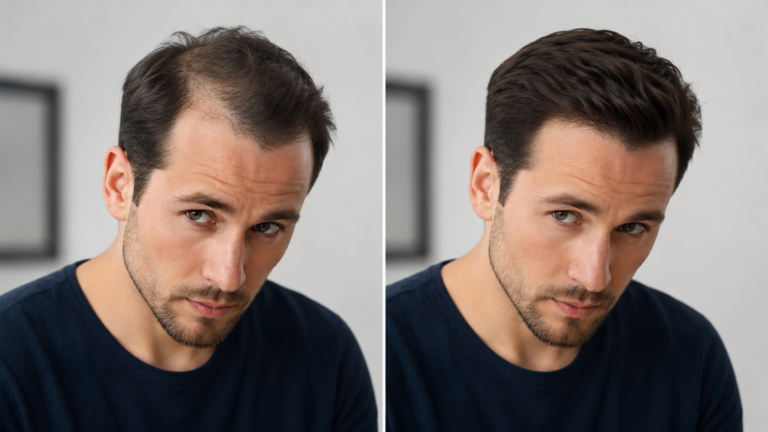
One of the earliest noticeable signs of male pattern baldness is a change in your hairline. Unlike a natural “maturing hairline,” which moves back evenly by about a centimeter as you transition out of your teenage years, a receding hairline recedes unevenly.
Typically, the hair above the temples begins to thin first. This creates a distinct “V” or “M” shape, commonly referred to as a widow’s peak.
Stage 1: Juvenile Line  -->  Stage 2: Maturing Line  -->  Stage 3: Receding "M" Shape
       [========]                 [---====---]                 [\--    --/]
You might notice that styling your hair the way you usually do becomes more difficult. The front section may feel sparser, or you may notice shorter, finer hairs along the edges that refuse to grow to their normal length.
Tracking these changes under consistent lighting every few months can help you determine whether your hairline is simply maturing or actively receding.
(If you are noticing early receding around the temples, starting a dedicated routine with Folicerin can help strengthen existing hair strands.)

2. Diffuse Thinning at the Crown or Vertex
While some men notice a receding hairline first, others experience diffuse thinning at the top or back of the head, known as the crown or vertex.
Because this area is difficult to see without a second mirror or a back-camera photograph, crown thinning often goes unnoticed during its initial stages. You might only realize it when someone mentions it or when you see yourself in a photograph taken from behind under direct sunlight.
- The Spiral Test: Look at the natural whorl or spiral at the back of your head. Early thinning causes the center of this spiral to expand, exposing more scalp.
- Sunburn Sensitivity: You may notice your scalp getting sunburned more easily during outdoor activities, indicating a drop in hair density.
- Loss of Volume: Your hair at the top feels flat and lacks the density needed to hold styles that previously worked effortlessly.
Catching crown thinning early gives you a significant advantage because the hair follicles in this region are often responsive to proactive scalp care and proper hygiene routines.
(Many men choose Folicerin because it combines daily cleansing with ingredients designed to support stronger-looking hair at the crown.)
3. Increased Hair Shedding in the Shower and Brush
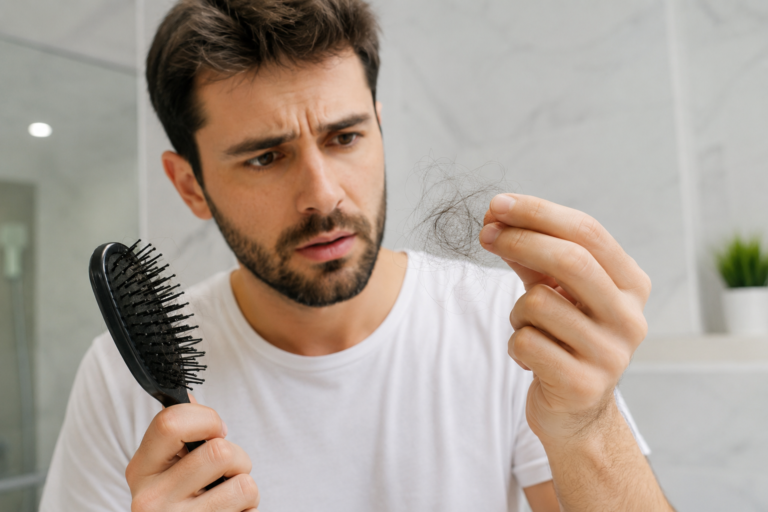
It is completely normal to shed between 50 and 100 hairs per day as part of the natural hair growth cycle. However, when shedding noticeably increases over several consecutive weeks, it may signal an accelerated shift into the telogen (resting) phase.
Pay attention to where shed hair accumulates:
- The Shower Drain: Finding unusually large clumps of hair blocking the drain after washing.
- Your Pillowcase: Waking up to numerous loose strands scattered across your pillow.
- Styling Tools: Noticing a significant buildup of hair in your comb or brush after basic grooming.
Instead of ignoring these signs or assuming it is temporary stress, monitor the trend over two to three weeks. Consistent shedding above baseline levels is one of the clearest signals that your hair growth cycle requires extra attention.
(If you want a simple daily routine for thinning hair that tackles excess shedding, Folicerin is one option worth exploring.)
4. Changes in Hair Texture and Miniaturization
Hair loss is not just about losing strands; it is also about the quality of the strands you retain. Follicular miniaturization alters the physical characteristics of your hair long before the follicle stops producing hair entirely.
When you run your fingers through your hair, pay close attention to structural shifts:
- Finer Strands: The hair shaft becomes noticeably thinner, transforming from coarse “terminal” hair into soft, wispy “vellus” hair.
- Loss of Elasticity: Hair becomes brittle, breaks easily, and struggles to retain moisture.
- Unruly Behavior: Thinning hair loses its weight and body, making it feel limp, flyaway, and difficult to manage with regular styling products.
When multiple hair strands in a specific area undergo miniaturization simultaneously, the overall volume drops, giving the illusion of sudden hair loss even if the actual count of hairs remains unchanged.
(Starting a consistent hair care routine early may help you maintain healthier-looking hair; many readers begin with Folicerin.)

5. An Itchy, Dry, or Excessively Oily Scalp
While an unhealthy scalp does not directly cause genetic male pattern baldness, poor scalp health creates an unfavorable environment that can accelerate hair thinning.
Excess sebum (scalp oil) can trap environmental impurities, dead skin cells, and product residue. This buildup can create localized inflammation around the hair follicle base, disrupting normal microcirculation and stressing already sensitive roots.
Excess Sebum / Impurities --> Follicle Inflammation --> Microcirculation Reduction --> Accelerated Thinning
Conversely, an overly dry, flaking scalp can cause chronic itching. Scratching can mechanically damage fragile hair shafts and inflame the surrounding tissue.
Maintaining a clean, well-balanced scalp environment is essential for supporting optimal microcirculation and keeping your existing hair firmly anchored.
(To keep your scalp properly cleansed without stripping natural moisture, incorporating Folicerin into your wash days offers a balanced approach.)
What Happens If You Ignore Early Hair Thinning?
Ignoring the initial signs of male pattern baldness allows the miniaturization process to continue uninterrupted. Over time, miniaturized hair follicles shrink to a point where they produce hair that is invisible to the naked eye, and eventually, the follicle can become dormant.
Early Detection (Miniaturization Active)  --> Reversible Stress & Support Phase
Late Action (Dormant Follicles)          --> Significantly Fewer Non-Invasive Options
Taking action early offers distinct advantages:
- More Preserved Density: It is significantly easier to support and strengthen existing hair than it is to attempt to revive long-dormant follicles.
- Broader Range of Options: Early-stage care often relies on non-invasive, daily topical habits rather than costly or invasive procedures.
- Greater Confidence: Proactive self-care eliminates the ongoing anxiety of watching your hair thin without a strategy.
Taking proactive steps early allows you to maintain control over your grooming routine and overall appearance.
Building a Proactive Daily Hair Care Strategy
A comprehensive hair preservation strategy works best when it combines internal wellness with external target care. Relying on a single habit is rarely as effective as taking a multi-faceted approach.
1. Optimize Your Nutrition
Hair strands are composed mostly of protein (keratin). Ensure your diet includes adequate lean proteins, biotin, zinc, iron, and essential fatty acids to supply the building blocks necessary for structural integrity.
2. Scalp Massage and Microcirculation
Gentle daily scalp massages using your fingertips can help stimulate blood flow to the hair roots. Improved microcirculation ensures that vital nutrient delivery reaches the hair bulb effectively.
3. Switch to a Specialized Cleansing Routine
Regular commercial soaps and harsh synthetic shampoos can strip the scalp of its natural protective barrier. Replacing them with a dedicated anti-hair loss shampoo helps clear excess sebum while delivering beneficial compounds directly to the scalp surface.
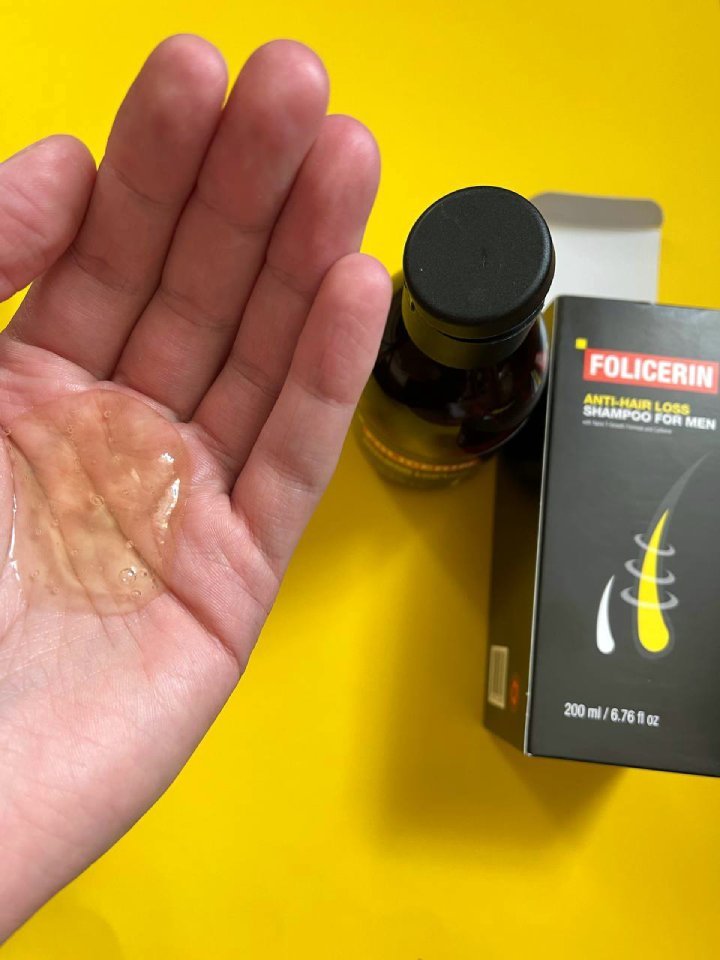
This is where a product like Folicerin fits naturally into your routine. Formulated specifically as an anti-hair loss shampoo for men, Folicerin thoroughly cleanses and conditions the scalp while helping to reduce hair shedding and strengthen existing strands.
Its formula utilizes biopolymer particles over 200 nm in diameter. This modern delivery technology helps stabilize active ingredients, ensuring they remain effective on the scalp during washing. Gentle enough for daily use, it supports improved microcirculation and leaves hair looking thicker and more resilient.
(For men seeking a modern, technology-backed daily shampoo, trying Folicerin is a practical step toward better scalp health.)
Comparing Your Options: Gentle Daily Care vs. Harsh Steps
When men notice early thinning, they often swing between doing nothing and rushing into aggressive solutions. Understanding where daily topical care fits can help you make an informed choice.
+-------------------------------------------------------------------------+
|                         HAIR CARE SPECTRUM                              |
|                                                                         |
|  Do Nothing  ----->  Gentle Daily Cleansing  ----->  Invasive Surgical  |
|  (Progression)       & Scalp Care (Folicerin)          Procedures       |
+-------------------------------------------------------------------------+
Instead of waiting until advanced thinning forces hard decisions, adopting a high-quality daily shampoo like Folicerin lets you care for your scalp conveniently as part of your normal shower routine.
(If you prefer a non-disruptive, gentle daily solution, exploring Folicerin provides an easy addition to your morning habits.)

Frequently Asked Questions
Can male pattern baldness be stopped entirely?
Male pattern baldness is a genetic condition, meaning it cannot be completely “cured.” However, early intervention, proper scalp hygiene, and targeted support can help reduce shedding, maintain existing hair, and improve the appearance of hair thickness over time.
How do I know if my hair loss is temporary or permanent?
Temporary hair loss (such as telogen effluvium) usually happens suddenly across the entire scalp after major stress, illness, or nutritional deficiency. Male pattern baldness follows a progressive pattern, typically starting at the temples or crown. A dermatologist can perform a scalp examination to provide an accurate diagnosis.
Does washing my hair daily accelerate hair loss?
No. Falling hair strands seen during shampooing were already detached from the follicle root days prior and were simply waiting to be washed away. Using a gentle anti-hair loss shampoo daily helps clear follicle-clogging sebum without causing extra loss.
How long does it take to see results from a new hair care routine?
Hair grows slowly, usually about half an inch per month. Consequently, changes in hair appearance, strength, or reduced shedding typically require consistent use of a routine for at least 3 to 6 months.
Is male pattern baldness inherited only from the mother’s side?
No, this is a common myth. While a key androgen receptor gene is located on the X chromosome inherited from the mother, many other genes associated with hair loss are inherited from both parents.
Can scalp massage help with thinning hair?
Scalp massage can help stimulate local microcirculation and relieve tension in the scalp tissue. While it is not a standalone fix for genetic baldness, it serves as a supportive practice alongside proper topical care.
Conclusion
Noticing the early signs of male pattern baldness—whether it is a subtle shift in your hairline, extra shedding in the drain, or diffuse thinning under bright light—can feel unsettling. However, recognizing these early indicators gives you the power to take control of your scalp health before miniaturization progresses further.
By maintaining good nutrition, managing stress, supporting blood circulation, and upgrading to specialized topical products like Folicerin, you create an environment where your hair can thrive.
Delaying action only allows natural thinning to continue unchecked. Taking small, consistent steps today can help you maintain your confidence, preserve your hair density, and keep your hair looking strong for years to come.
(Take control of your daily hair care routine today by adding Folicerin to your shower regimen.)