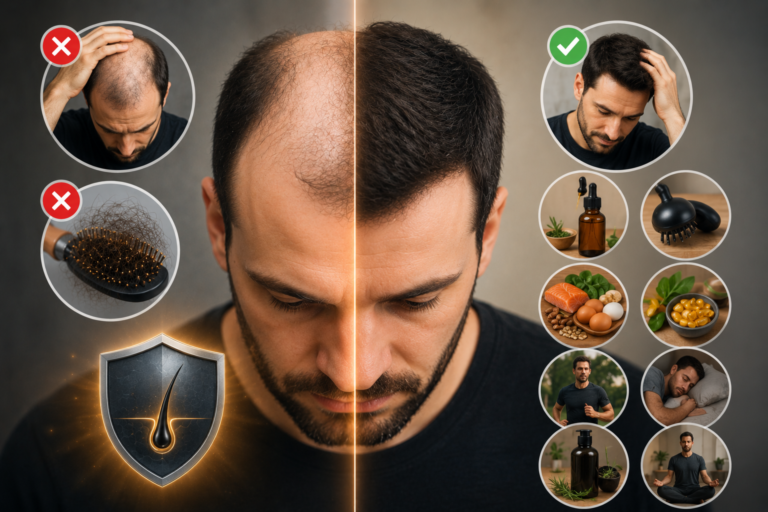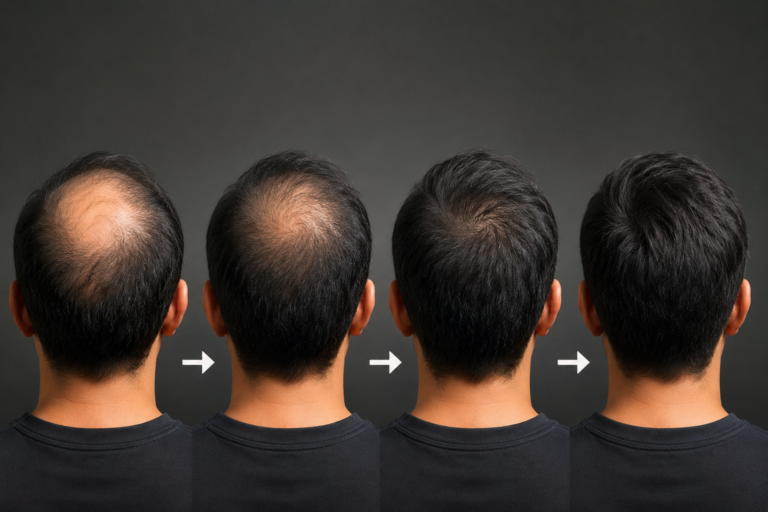
Hairline Receding? 7 Warning Signs You Should Never Ignore
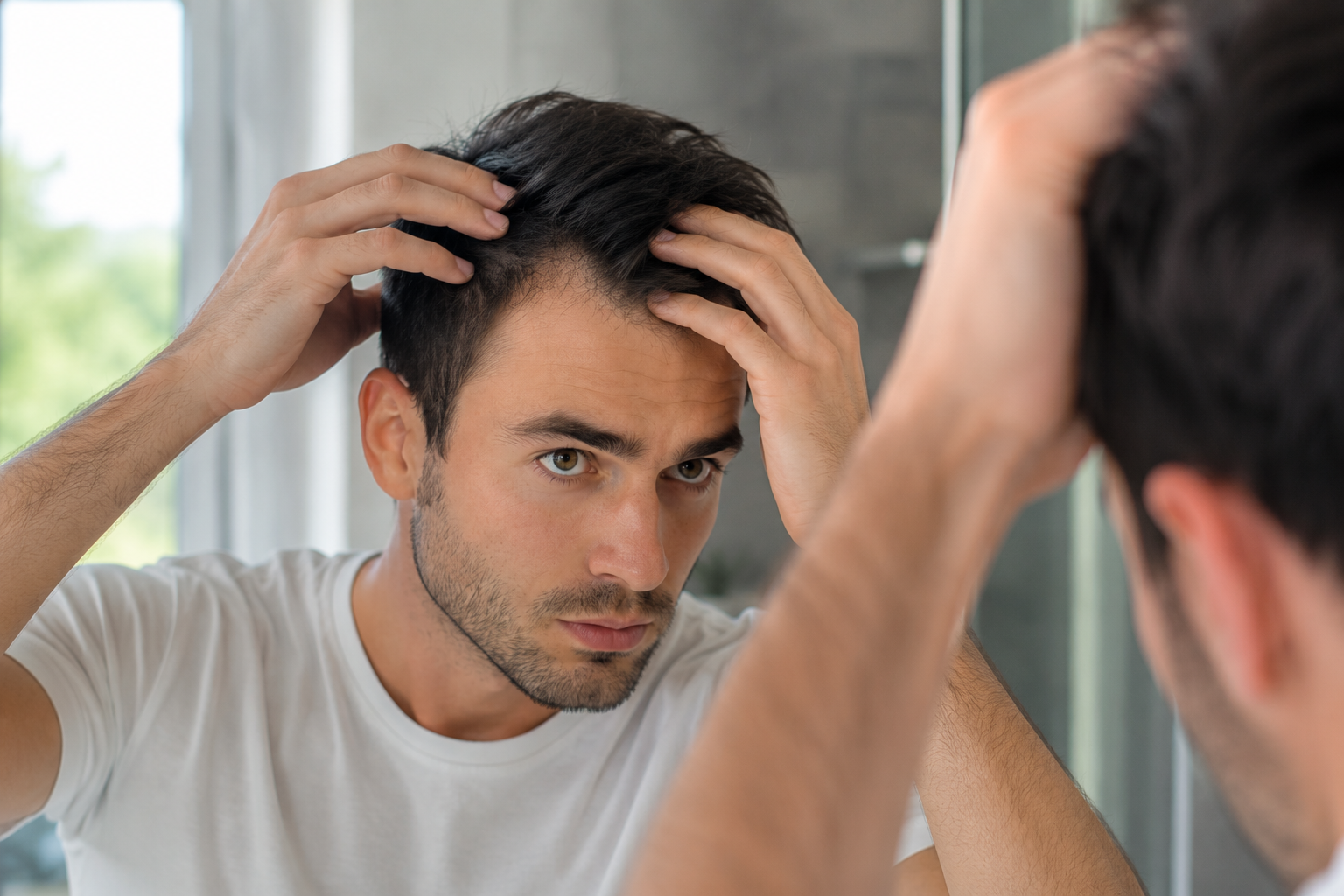
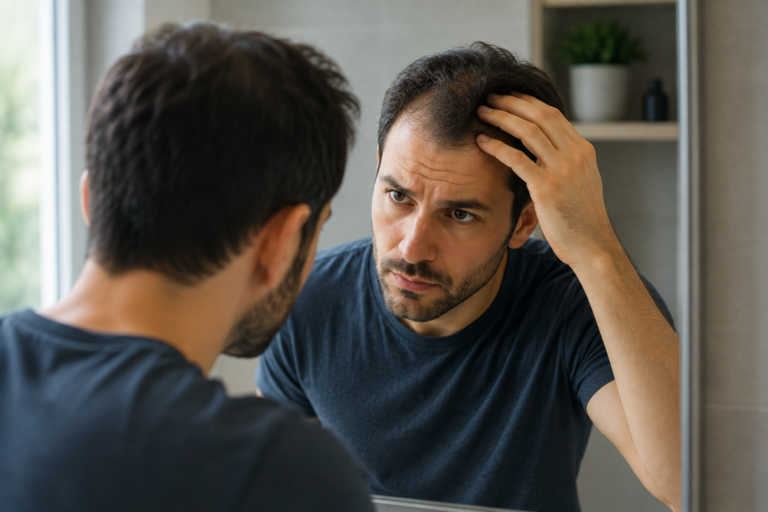
Noticing that your hairline looks higher than it used to can be unsettling.
You may first notice a little more forehead showing when you look in the mirror. Later, you might see that the temples appear slightly thinner or that the shape of your hairline has changed.
But a changing hairline does not always have exactly the same cause.
For many men, a gradually receding hairline is associated with hereditary hair loss. However, hair changes can also be related to stress, certain medical conditions, medications, nutritional problems, or repeated tension on the hair.
Understanding the pattern and progression can help you determine what may be happening.
What Does a Receding Hairline Look Like?
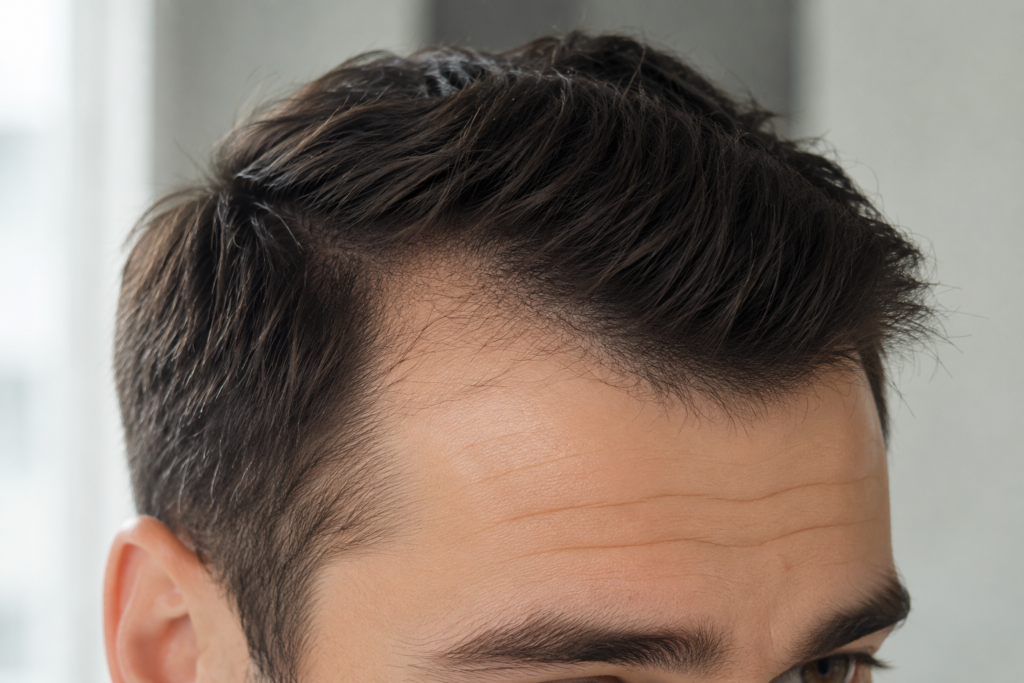
A receding hairline means that the visible hairline gradually moves backward from its previous position.
Common signs include:
- More forehead becoming visible
- Thinning around the temples
- An increasingly noticeable “M” shape
- Finer hairs around the front of the scalp
- A gradual change in the position of the hairline
- Increased scalp visibility near the front
The important word is gradually.
A hairline can naturally change as you age, so seeing a slightly different hairline does not automatically mean that you are developing significant hair loss.
1. Genetics and Male Pattern Hair Loss
One of the most common explanations for a gradually receding hairline in men is hereditary hair loss.
Male pattern hair loss can cause a receding hairline, thinning at the crown, or both. The American Academy of Dermatology explains that this type of hair loss can develop gradually and is influenced by genetic and hormonal factors.
The pattern can vary from one person to another.
Some men notice the temples first.
Others notice thinning across the top of the scalp before the hairline becomes significantly different.
Because hereditary hair loss tends to progress gradually, comparing photographs taken months apart can be more useful than checking your hair every day.
2. Age-Related Hairline Changes
Not every change in the hairline means active hair loss.
As men get older, the shape and density of their hair can naturally change.
A teenager’s hairline may look different from the hairline he has in his twenties or thirties.
This is one reason why it is important to look at the overall pattern rather than assuming that every change is abnormal.
If the hairline is slowly changing without obvious rapid thinning, monitoring it over time can provide useful information.
3. Stress and Increased Hair Shedding
Stress can affect the hair-growth cycle.
Significant physical or emotional stress may be followed by increased shedding in some people. The American Academy of Dermatology notes that excessive shedding can occur after major stress, illness, surgery, high fever, or significant weight loss.
This type of shedding can sometimes make the hair appear less dense.
However, stress-related shedding is not necessarily the same thing as a progressively receding hairline.
If the temples continue moving backward over time, another cause may be involved.
4. Nutritional Problems
Your body needs adequate nutrition to support normal hair growth.
The AAD lists deficiencies involving nutrients such as iron, zinc, protein, and biotin among possible causes of noticeable hair loss.
However, nutritional deficiency is only one possibility.
You should not automatically assume that a receding hairline means you need supplements.
Taking high doses of vitamins or minerals without knowing whether you have a deficiency is not necessarily beneficial.
If you have concerns about your diet or nutritional status, discussing them with a healthcare professional can help determine whether testing is appropriate.
5. Certain Medications
Some medications can be associated with hair loss.
The relationship depends on the particular medication and the individual.
If you started noticing increased shedding or thinning after beginning a medication, don’t stop taking it on your own.
Instead, speak with the healthcare professional who prescribed it.
They can determine whether the medication could be contributing to the change and whether an alternative approach is appropriate.
6. Repeated Pulling and Tension
Constant tension can affect the hair.
The AAD describes traction alopecia as hair loss caused by repeated pulling on the hair. Tight hairstyles can place continuous stress on the follicles, particularly around areas where the hair is repeatedly pulled.
Although this is not the most common explanation for a typical male receding hairline, it is worth considering if you frequently wear hairstyles that pull tightly on the front or sides.
Reducing unnecessary tension can help prevent further mechanical stress.
7. Scalp Conditions
Certain scalp problems can also be associated with hair loss.
Depending on the condition, you may notice additional symptoms such as:
- Itching
- Redness
- Scaling
- Burning
- Tenderness
- Inflammation
- Sudden areas of missing hair
If your hairline changes together with significant scalp symptoms, don’t automatically assume that genetics are responsible.
A dermatologist can examine the scalp and determine whether another condition may be involved.
Is a Receding Hairline Always Male Pattern Baldness?
No.
A receding hairline can have different explanations.
However, a gradual change around the temples and front of the scalp is a common pattern of male pattern hair loss.
The AAD recommends identifying the cause of hair loss because different causes can require different treatments.
The progression is particularly useful to observe.
If the hairline continues moving backward over months or years, hereditary hair loss becomes one possibility worth discussing with a professional.
How Can You Tell If Your Hairline Is Actually Receding?
It can be difficult to notice gradual changes when you look at yourself every day.
One useful approach is taking photographs.
Take clear pictures of:
- The front hairline
- Both temples
- The top of the scalp
- The crown
Try to use similar lighting, camera distance, and hairstyle each time.
Then compare the photographs after several months.
This gives you a better picture of whether your hairline is actually changing.
Avoid judging your hair based on one photograph taken under harsh overhead lighting.
Wet hair can also make the scalp appear more visible than usual.
Why Do the Temples Usually Look Thinner First?
For men with hereditary pattern hair loss, the temples can become noticeably thinner as the hairline changes.
The front corners may gradually move backward while the central portion of the hairline remains more forward.
This can eventually create an “M” shaped appearance.
The exact pattern varies between individuals.
Some men experience mostly temple recession, while others also develop significant thinning across the top or crown.
Can a Receding Hairline Stop?
It depends on the cause.
If the change is related to a temporary trigger, the hair may improve after the underlying issue is resolved.
However, hereditary male pattern hair loss can continue gradually over time.
The AAD notes that treatments for male pattern hair loss can be more effective when started earlier.
This is one reason why understanding the cause matters.
Waiting until substantial thinning has occurred may reduce the potential for improvement compared with addressing the problem earlier.
Can Hair Grow Back on a Receding Hairline?
Sometimes improvement is possible, but it depends on why the hairline is changing.
Temporary shedding may improve after the underlying trigger disappears.
Hereditary hair loss is different and may require specific treatment.
A dermatologist can assess the pattern of hair loss and discuss appropriate options.
The important thing is not to assume that every product marketed for hair growth will work for every type of hair loss.
Should You Use a Hair Loss Shampoo?
A shampoo can be part of a healthy hair-care routine, but expectations should remain realistic.
The AAD explains that hair-loss shampoos may help hair retain moisture, reduce breakage, or make the hair appear fuller, but they cannot regrow hair or prevent hereditary hair loss from getting worse.
That means shampoo should not automatically be considered a treatment for a receding hairline.
If the hairline is progressively changing, identifying the underlying cause is more important.
What Can You Do If Your Hairline Is Changing?
Start by observing the pattern.
Take photographs and compare them over time.
Also consider what was happening before you noticed the change.
Ask yourself:
- Has the change been gradual or sudden?
- Are the temples becoming thinner?
- Is the crown also thinning?
- Are you seeing more scalp than before?
- Have you experienced significant stress?
- Have you recently been ill?
- Have you changed your diet?
- Are you taking any new medications?
- Do you have scalp symptoms?
These details can help provide a clearer picture.
When Should You See a Dermatologist?
Consider professional evaluation if:
- Your hairline is changing quickly
- You develop a sudden bald patch
- Hair loss is severe
- The crown is becoming thinner at the same time
- Your scalp is painful or inflamed
- You have significant itching or scaling
- You are losing hair from other areas
- You are concerned about progressive thinning
A dermatologist can examine your scalp and hair and determine whether the pattern is consistent with hereditary hair loss or another condition.
Frequently Asked Questions
Why is my hairline receding?
A gradually receding hairline in men is commonly associated with hereditary male pattern hair loss, but other causes are possible.
At what age does a receding hairline start?
There is no single age. Hereditary hair loss can begin at different ages and may progress gradually.
Is a slightly higher hairline normal?
Yes. Hairlines can naturally change with age, and a slightly different hairline does not automatically mean significant hair loss.
Can stress cause a receding hairline?
Stress can trigger increased hair shedding, but that is not necessarily the same as progressive recession of the hairline.
Can a receding hairline grow back naturally?
It depends on the cause. Some temporary types of shedding can improve, while hereditary hair loss may continue without treatment.
Does a receding hairline mean I’m going bald?
Not necessarily. The degree and progression of hairline recession vary considerably between individuals.
Should I take vitamins for a receding hairline?
Not automatically. Vitamins are most useful when there is a genuine nutritional deficiency.
Can shampoo reverse a receding hairline?
You should not expect a shampoo alone to reverse hereditary hair loss. Hair-loss shampoos have limitations and should not be considered equivalent to medical treatments.
Final Thoughts
A changing hairline can be worrying, but there is no reason to assume immediately that you are going bald.
Genetics are a common factor in male pattern hair loss, but stress, nutrition, medications, scalp conditions, and repeated tension can also affect hair.
The best way to understand what’s happening is to look at the pattern and progression rather than focusing on a single day of shedding.
Take photographs, monitor changes over time, and pay attention to other symptoms.
If your hairline is progressively receding or you’re experiencing sudden or unusual hair loss, consider getting professional advice.
Understanding the cause is the first step toward deciding what, if anything, you should do next.