Best DHT Blockers for Hair Loss: Proven Options
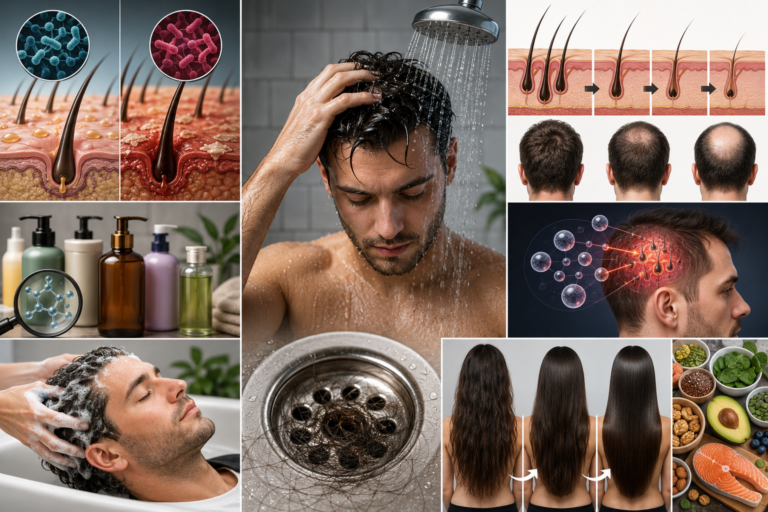
Finding extra strands of hair in the shower drain every morning creates a unique kind of quiet anxiety. You look in the bathroom mirror, pull your hair back, and wonder if your hairline is receding further than it was last month.
You are not alone in this struggle. Millions of men face age-related hair thinning and androgenetic alopecia every single day. Hair loss is rarely just about appearance—it touches your self-image, affects your confidence in social settings, and can make you feel older than you truly are.
The good news is that understanding the root cause of male pattern baldness gives you the power to take control. For most men, a hormone called Dihydrotestosterone (DHT) is the primary culprit behind shrinking hair follicles and progressive thinning.
In this guide, we will break down how DHT impacts your scalp, compare the most effective DHT-blocking options available today, and help you choose a practical, sustainable strategy to maintain thicker, healthier-looking hair.
Table of Contents
- Understanding DHT and Male Pattern Hair Loss
- What Happens If You Ignore Hair Thinning?
- Top Categories of DHT Blockers Compared
- Key Ingredients to Look for in Daily Hair Care
- Oral vs. Topical Approaches: Which Is Right for You?
- How Modern Delivery Technology Enhances Scalp Care
- Building a Simple Daily Hair Maintenance Routine
- Frequently Asked Questions
- Conclusion
- Medical Disclaimer
Understanding DHT and Male Pattern Hair Loss
To protect your hair, you must first understand why it falls out. Hair loss in men is primarily driven by genetics and sensitivity to male hormones called androgens.
What Is DHT?
Dihydrotestosterone (DHT) is an androgen derived from testosterone. An enzyme called 5-alpha reductase converts a portion of your body’s natural testosterone into DHT. While DHT plays an important role in early male development, it can have undesirable effects on scalp hair follicles later in life.
The Follicle Miniaturization Process
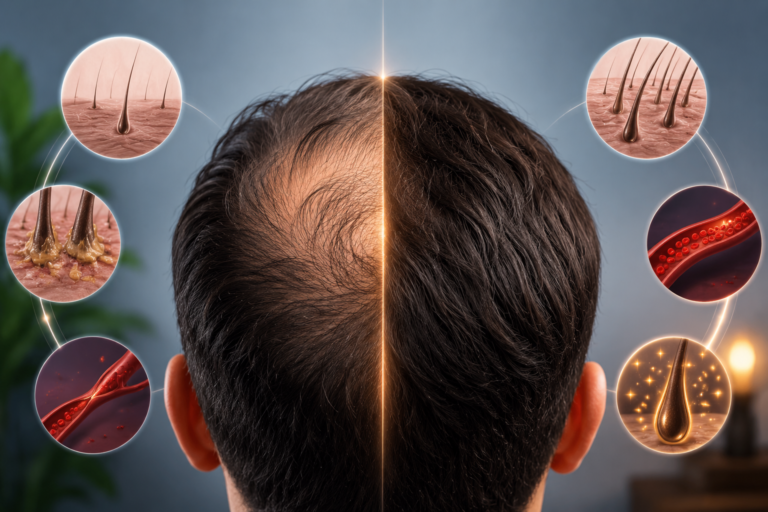
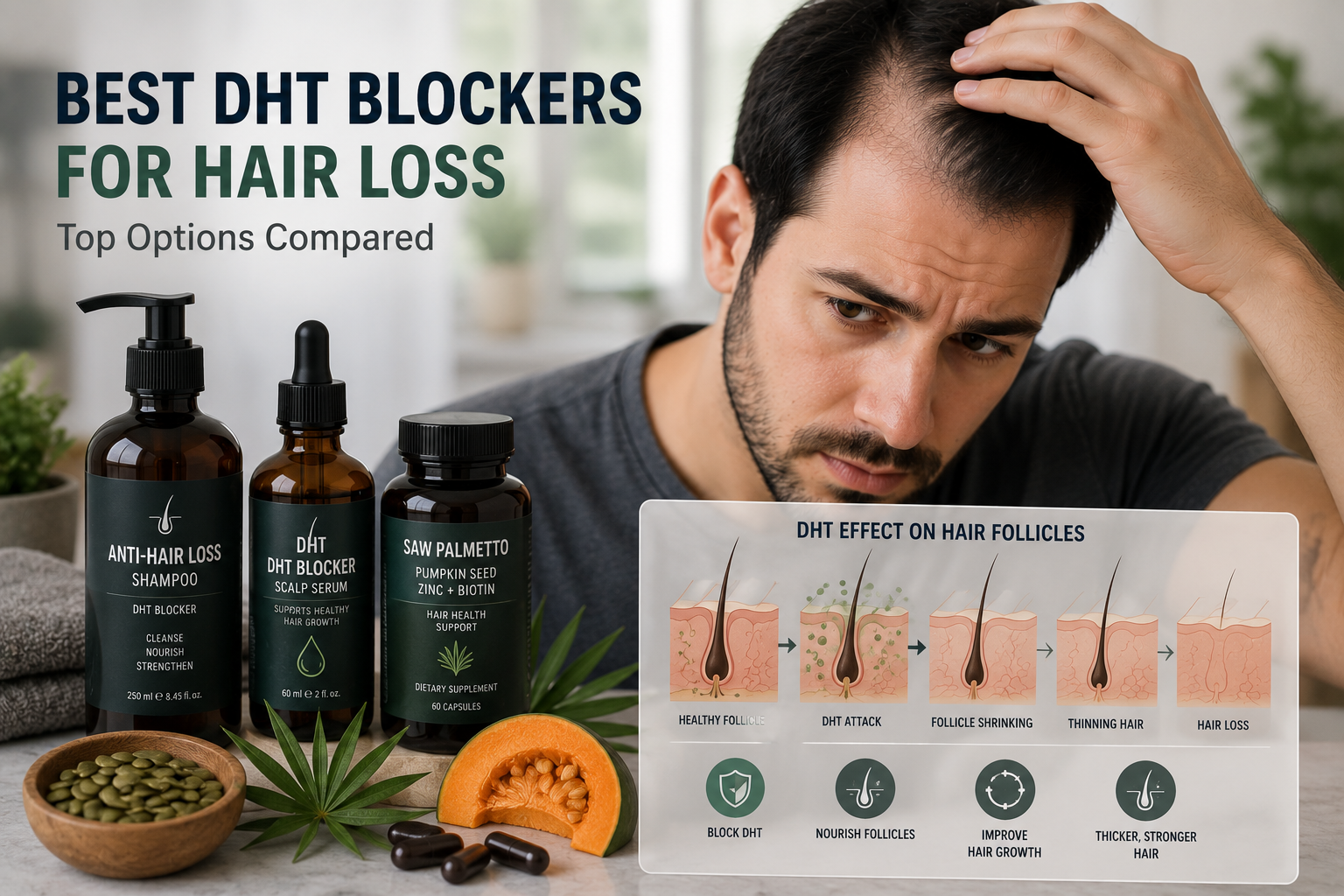
If your hair follicles are genetically sensitive to DHT, the hormone binds to receptors in your scalp. Over time, this interaction leads to a process called miniaturization:
- The growth phase (anagen phase) of the hair cycle shortens.
- The hair strands grow back thinner, weaker, and shorter in each cycle.
- Blood circulation to the individual hair follicle decreases.
- Eventually, the follicle stops producing visible hair altogether.
Key Takeaway: Stopping or slowing down the effects of DHT on scalp follicles is the single most important step in managing male pattern baldness.
(Learning how hormone levels impact scalp health helps you choose targeted care routines designed to support stronger hair growth.)
What Happens If You Ignore Hair Thinning?
Hair loss is a progressive condition. When men notice initial recession at the temples or diffuse thinning at the crown, it is tempting to hope it will stop on its own. However, untreated follicular miniaturization continues quietly beneath the surface.
Early Detection (Reversible Weakness)
        │
        ▼
Follicle Miniaturization (Strands Thin & Shorten)
        │
        ▼
Advanced Dormancy (Follicle Stops Producing Hair)
When hair follicles remain exposed to high levels of localized DHT for extended periods, they gradually shrink until they lose the ability to produce new strands. Once a follicle completely closes and scarring occurs, non-surgical revival becomes extremely difficult.
Taking action early yields significantly better long-term results than trying to restore hair after significant loss has occurred. Establishing a supportive routine today preserves the healthy hair you still have.
Top Categories of DHT Blockers Compared
When searching for the best DHT blockers for hair loss, you will encounter several different approaches. Understanding how these categories differ allows you to make a safe, informed decision tailored to your lifestyle.
| Category | Mechanism of Action | Common Examples | Primary Benefit | Considerations |
| Prescription Systemic | Blocks 5-alpha reductase enzyme internally | Finasteride, Dutasteride | High biological potency | Requires prescription; potential systemic side effects |
| Topical Solutions | Delivers active ingredients directly to the scalp | Saw Palmetto, Pumpkin Seed Extract, Ketoconazole | Targeted localized application | Must be used consistently |
| Nutritional Supplements | Supports internal nutrient levels and hormonal balance | Zinc, Biotin, Saw Palmetto capsules | Overall wellness support | Secondary effect on scalp DHT |
| Topical Daily Cleansers | Cleanses scalp microenvironment and strengthens strands | Specialized Anti-Hair Loss Shampoos | Easy daily integration; zero system impact | Best used as part of a comprehensive routine |
(If you are seeking a simple, low-risk way to care for your scalp every day, exploring specialized cleansing formulas is an ideal starting point.)
Key Ingredients to Look for in Daily Hair Care
Not all scalp care products are created equal. When evaluating topical products and shampoos, look for evidence-backed botanical extracts and specialized compounds that support scalp health and reinforce hair structure.
Botanical Extracts
- Saw Palmetto (Serenoa repens): A widely studied plant extract that helps inhibit the 5-alpha reductase enzyme locally on the scalp.
- Pumpkin Seed Oil: Rich in phytosterols, which support healthier hair density and protect against environmental stress.
- Ginkgo Biloba & Ginseng: Natural extracts known to encourage microcirculation in the scalp, ensuring nutrients reach the root.
Structural Compounds & Micronutrients
- Biotin (Vitamin B7): Essential for keratin production, helping to improve the physical strength of individual hair strands.
- Zinc & Copper Peptides: Minerals essential for maintaining normal hair follicle tissue function and repairing daily wear.
Integrating these ingredients into your daily hygiene routine provides a nourishing environment that supports stronger, fuller-looking hair without adding complicated steps to your morning.
Oral vs. Topical Approaches: Which Is Right for You?
Choosing between oral treatments and topical options depends on your personal preferences, tolerance for side effects, and long-term goals.
                  ┌──────────────────────────────┐
                  │    Hair Loss Management      │
                  └──────────────┬───────────────┘
                                 │
                 ┌───────────────┴───────────────┐
                 ▼                               ▼
     ┌───────────────────────┐       ┌───────────────────────┐
     │    Oral Blockers      │       │   Topical Blockers    │
     ├───────────────────────┤       ├───────────────────────┤
     │ • Systemic absorption │       │ • Targeted action     │
     │ • Internal inhibition │       │ • Scalp conditioning  │
     │ • Requires RX         │       │ • High safety profile │
     └───────────────────────┘       └───────────────────────┘
Oral Systemic Blockers
Oral prescription options reduce DHT levels throughout your entire body. While effective, some men prefer to avoid oral medications due to potential systemic side effects or personal health considerations.
Topical Scalp Care
Topical approaches focus directly where the problem lies: the scalp microenvironment. Specialized formulas work to nourish roots, wash away excess sebum (which contains localized DHT), and strengthen existing hair shafts without altering systemic hormone levels.
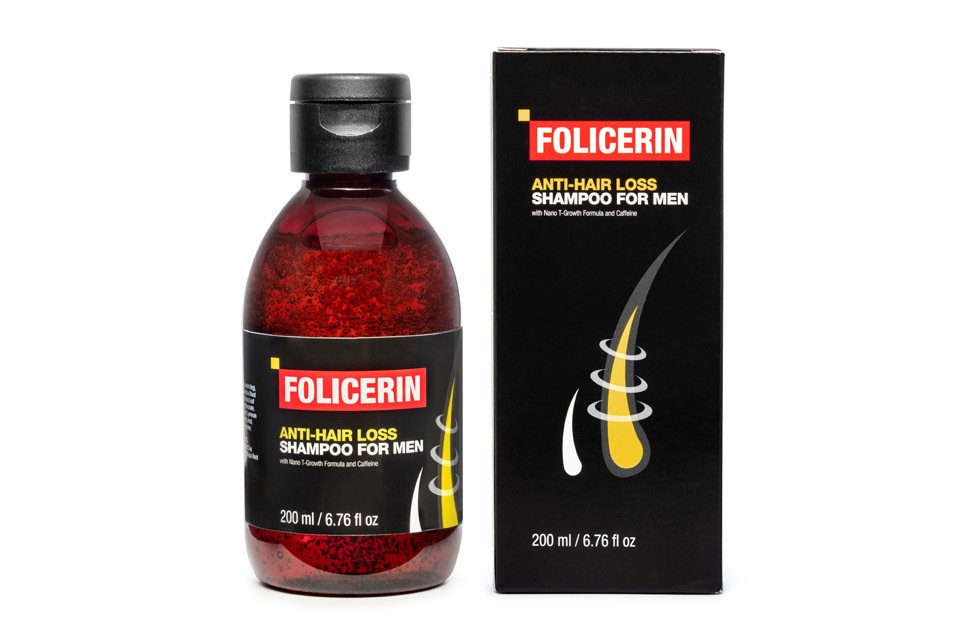
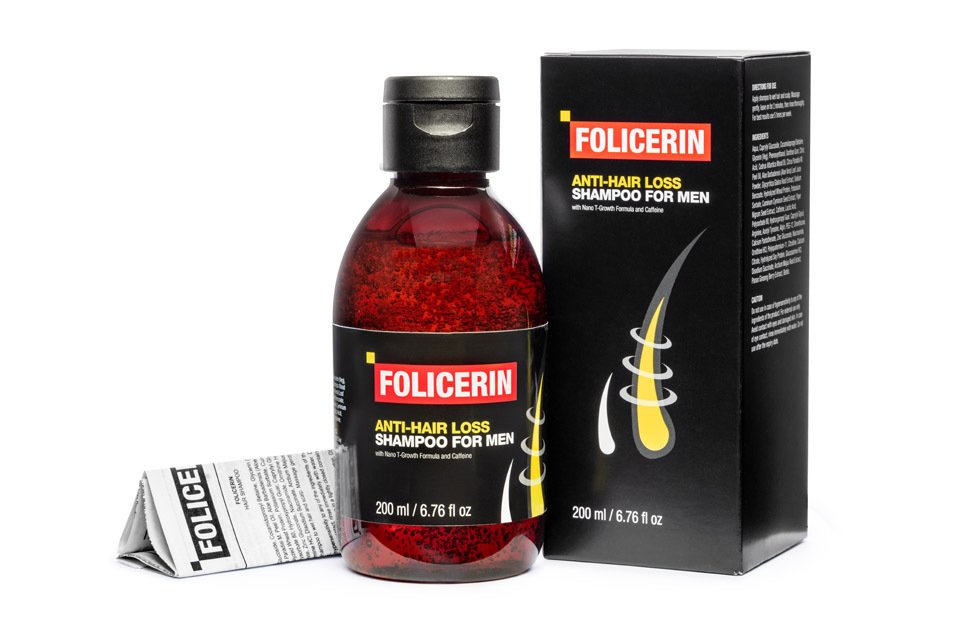
(If you prefer a non-invasive solution that fits into your shower routine, Folicerin provides an advanced approach designed for daily topical care.)
How Modern Delivery Technology Enhances Scalp Care
One common frustration with traditional hair loss shampoos and topical serums is poor absorption. Active ingredients often get washed away before they can penetrate the scalp effectively.
Modern formulation techniques have solved this challenge using biopolymer particle encapsulation.
[ Active Ingredient Core ] ──► Encapsulated in Biopolymer Shield (>200 nm) ──► Targeted Scalp Delivery
By enclosing delicate active substances within biopolymer particles (typically over 200 nm in diameter), manufacturers achieve:
- Stabilization: Sensitive ingredients remain potent and active longer.
- Enhanced Penetration: Active ingredients deliver directly to the upper layers of the scalp and hair roots.
- Sustained Release: Benefits continue even after rinsing off the product.
This advanced ingredient delivery technology ensures that your daily shower routine provides maximum structural support to thinning hair.
Building a Simple Daily Hair Maintenance Routine
Consistency is the secret to managing hair health. A complex ten-step routine is hard to stick with, but a streamlined daily habit yields consistent long-term benefits.
Step 1: Cleanse and Stimulate
Wash your hair daily or every other day with a specialized anti-hair loss shampoo designed to clean away sebum accumulation while improving scalp microcirculation. Massage gently with your fingertips for two minutes to encourage local blood flow.
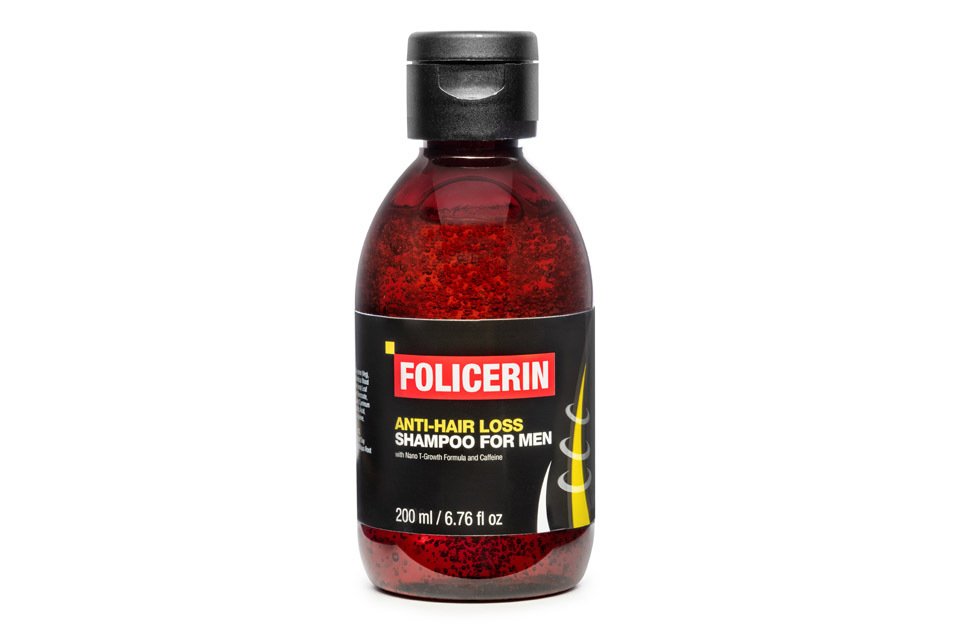
(Many men choose Folicerin because it combines daily scalp cleansing with ingredients designed to support stronger-looking hair.)
Step 2: Gentle Drying
Avoid aggressive towel rubbing, which snaps delicate, miniaturized strands. Gently pat your hair dry with a soft microfiber towel.
Step 3: Balanced Nutrition and Lifestyle
Support your topical care from within by eating a diet rich in lean proteins, healthy fats, and antioxidants. Manage stress levels, as elevated cortisol can accelerate hair shedding cycles.
(Starting a consistent hair care routine early may help you maintain healthier-looking hair, and many readers begin with Folicerin.)
Frequently Asked Questions
Can natural DHT blockers completely reverse baldness?
Natural DHT blockers and topical treatments help support existing hair density, reduce shedding, and improve strand strength. However, they cannot restore hair in areas where follicles have completely dormant or scarred over. Early preventative care yields the best outcomes.
How long does it take to see results from a topical hair routine?
Hair grows slowly—typically about half an inch per month. It generally takes 3 to 6 months of consistent daily care to notice visible improvements in hair thickness, reduced shedding, and improved scalp health.
Are topical DHT blocking products safe for daily use?
Yes. Quality topical products and shampoos formulated for male pattern thinning use gentle, dermatologically tested ingredients designed for regular daily application without causing scalp irritation.
Does washing my hair every day cause more hair loss?
No. The hairs you see in the drain during a shower were already in the telogen (shedding) phase and destined to fall out. Regular cleansing removes excess oil and DHT accumulation, creating a healthier environment for new growth.
What is the difference between minoxidil and DHT blockers?
Minoxidil is a vasodilator that increases blood flow and oxygen to hair follicles to stimulate growth. DHT blockers specifically address the hormonal cause of thinning by stopping DHT from shrinking the follicle. Combining vascular support with DHT management offers a comprehensive approach.
Conclusion
Hair loss can feel overwhelming, but you do not have to watch your hair thin without taking action. By understanding how DHT affects your scalp and choosing targeted, evidence-based care strategies, you can protect your hairline and maintain your confidence.
Whether you opt for lifestyle adjustments, specialized topical treatments, or modern daily cleansing routines, consistency is essential. Delaying care allows miniaturization to continue, making proactive steps vital today.
(If you want a simple daily routine for thinning hair, Folicerin is one modern option worth exploring to strengthen your hair from the root.)
Take charge of your hair care routine now—your future self will thank you for acting early.