Can Hair Grow Back After Thinning? The Truth About Regrowth
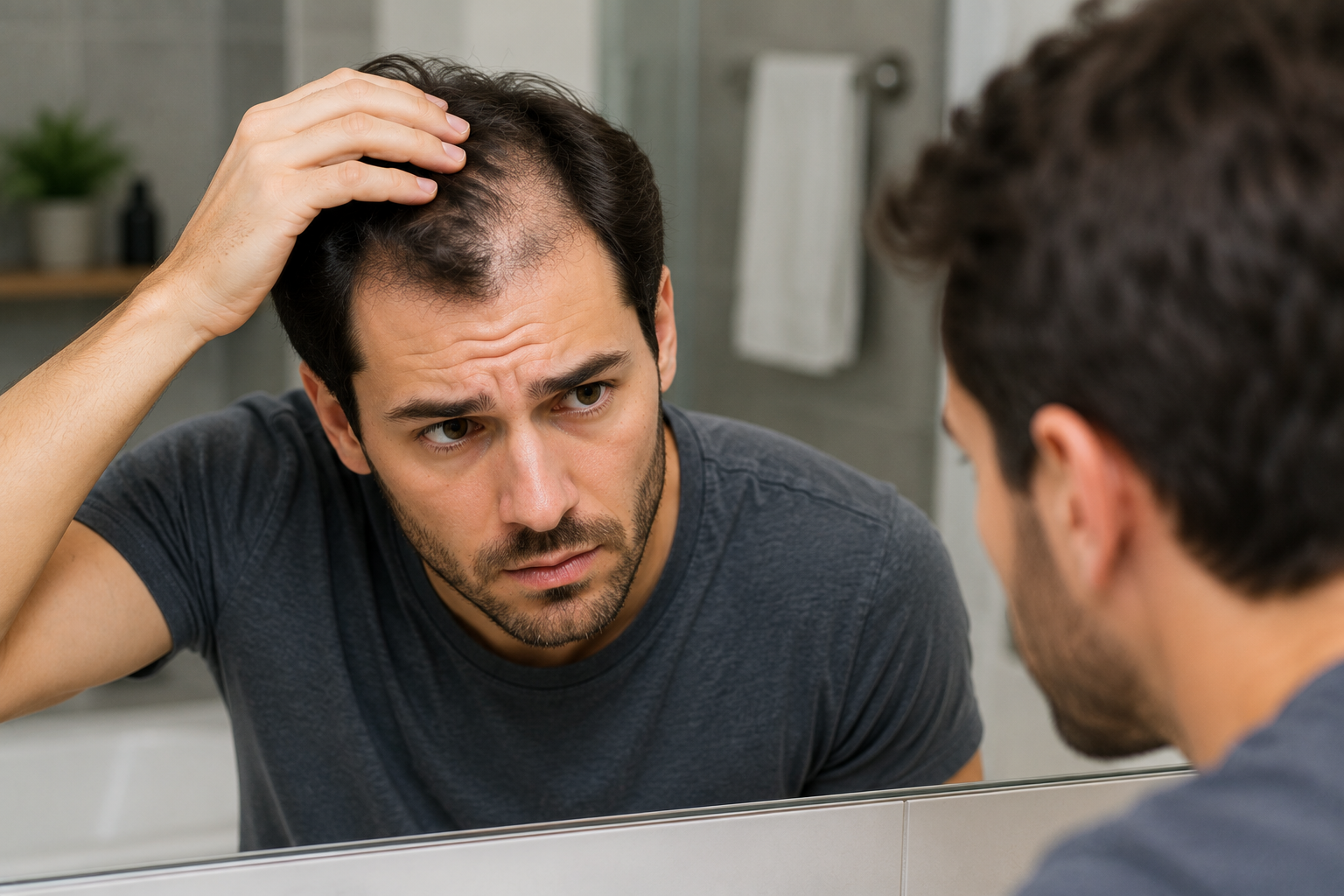
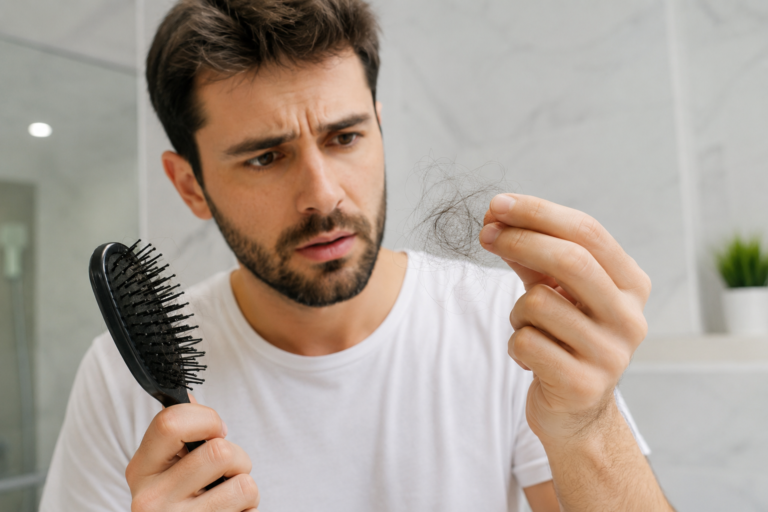
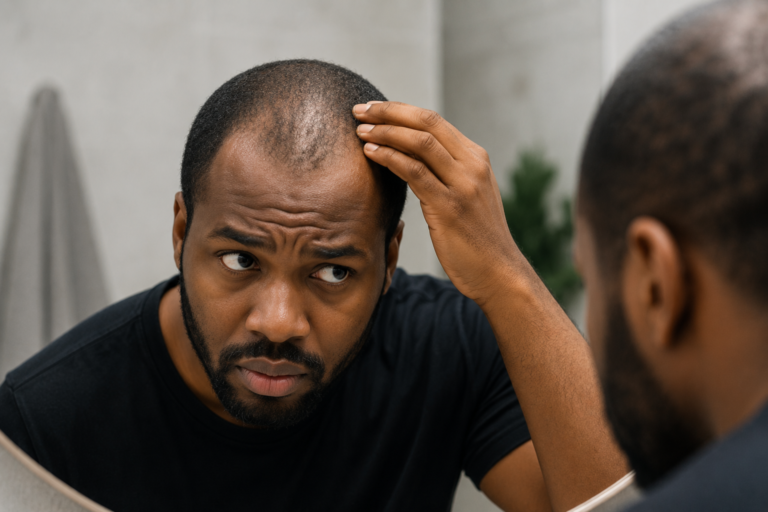
You step out of the shower, wipe the steam off the bathroom mirror, and glance up. There it is again. The overhead light catches your scalp a little too clearly. You run a hand through your hair, and a few loose strands cling to your fingers.
A quiet knot of anxiety tightens in your chest.
It is not just about the hair. It is about how it makes you feel. Maybe you have caught yourself adjusting your lighting on video calls, tilting your hat just right, or deleting a group photo because your hairline looked thinner than you remembered. Thinning hair can quietly drain your confidence, making you feel older than your years.
If you have found yourself searching for answers late at night, asking yourself if your hair can actually grow back after thinning, you are not alone.
Here is the direct answer: Yes, in many cases, hair can regrow or visibly thicken after thinning—provided the hair follicles are still alive and active.
Understanding why your hair is thinning is the first step toward taking back control. Let’s break down the science, cut through the marketing noise, and explore practical solutions that work.
Table of Contents
- Understanding Hair Thinning: What Is Happening to Your Scalp?
- The Hair Growth Cycle Explained
- Miniaturization: Why Hair Gets Thinner Over Time
- Can Hair Follicles Regenerate After Thinning?
- Reversible vs. Permanent Hair Loss
- What Happens If You Ignore Hair Thinning?
- Proven Strategies to Support Hair Regrowth and Density
- Building a Daily Hair Care Routine That Works
- Frequently Asked Questions (FAQ)
- Conclusion
- Medical Disclaimer
Understanding Hair Thinning: What Is Happening to Your Scalp?
Hair thinning rarely happens overnight. It is a slow process that often goes unnoticed until you lose up to 50% of your hair density in a specific area.
For most men, hair thinning is driven by androgenetic alopecia, commonly known as male pattern baldness. This condition is primarily linked to genetics and sensitivity to dihydrotestosterone (DHT), a byproduct of testosterone.
When DHT attaches to sensitive hair follicles on your scalp, it gradually causes them to produce thinner, shorter, and weaker hairs.
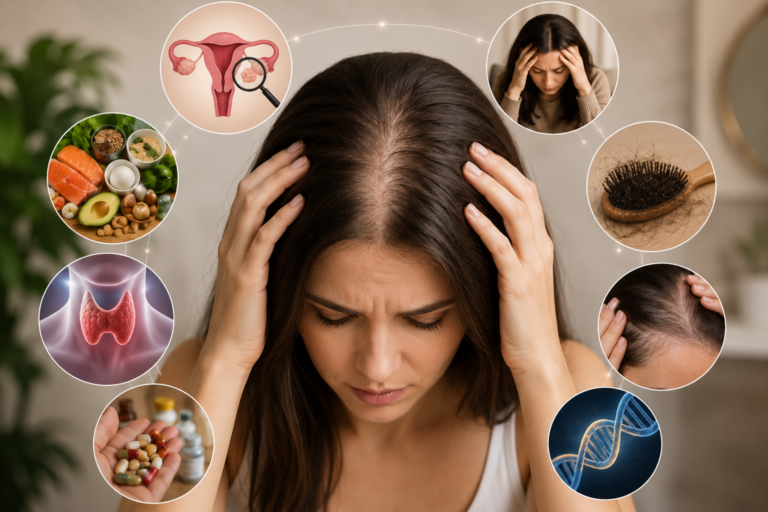
However, genetics are not the only culprit. Everyday triggers can accelerate hair shedding and thinning:
- Chronic Stress: High cortisol levels can force hair follicles into a resting phase prematurely.
- Poor Scalp Microcirculation: Restricted blood flow deprives hair roots of vital nutrients and oxygen.
- Nutritional Deficiencies: A lack of key vitamins, protein, and minerals weakens hair structure.
- Harsh Hair Products: Sulfates and heavy chemical buildup can clog follicles and irritate the scalp.
Identifying the specific factors contributing to your hair loss helps you choose an effective action plan.
(Understanding how stress and lifestyle impact your scalp health is essential for maintaining a full head of hair.)
The Hair Growth Cycle Explained
To understand how hair regrows, you need to know how it grows in the first place. Every single hair on your scalp goes through a continuous four-phase cycle:
- Anagen (Growth Phase): Lasts 2 to 6 years. About 85–90% of your hair is in this phase right now.
- Catagen (Transition Phase): Lasts 2 to 3 weeks. Hair growth stops, and the follicle detaches from the blood supply.
- Telogen (Resting Phase): Lasts 2 to 3 months. The hair rests while a new hair begins forming underneath.
- Exogen (Shedding Phase): The old hair falls out, allowing the new strand to emerge. Losing 50 to 100 strands a day is completely normal.
When hair thinning occurs, the Anagen phase shrinks, while the Telogen phase lengthens. This means your hair spends less time growing and more time resting or shedding.
Miniaturization: Why Hair Gets Thinner Over Time
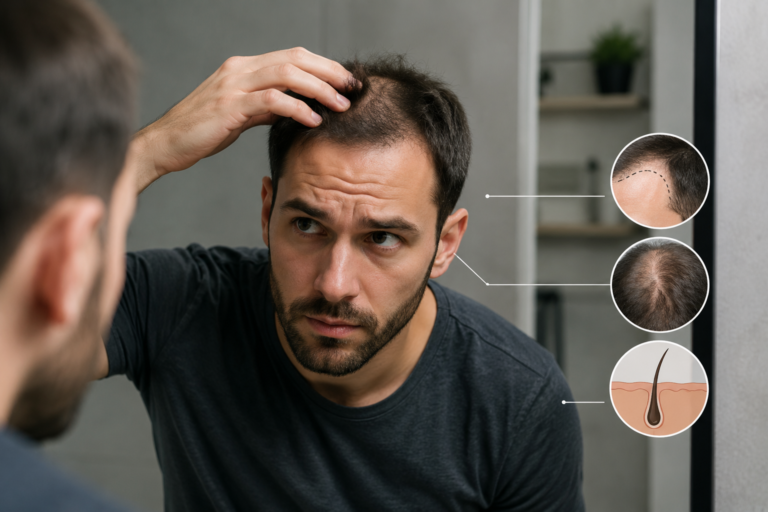
If you look closely at an area of thinning scalp, you will notice that the hairs are not completely gone. Instead, some strands appear fine, wispy, and lighter in color. This process is called follicular miniaturization.
Under the influence of DHT and poor circulation, the hair follicle physically shrinks with every growth cycle.
Key Takeaway: Miniaturized hair strands are not dead; they are simply undernourished and constricted. As long as the follicle remains open, targeted interventions can support stronger, thicker-looking growth.
If you catch miniaturization early, you have a significantly higher chance of reviving those weakened follicles before they permanently close.
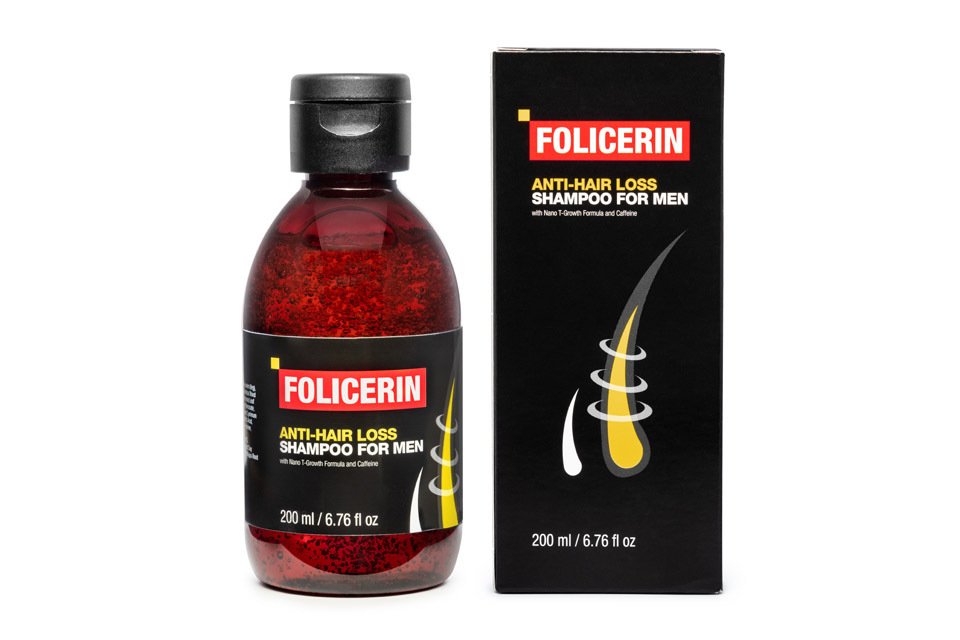
(Starting a consistent daily hair care routine early may help you maintain healthier-looking hair. Many readers begin with Folicerin.)
Can Hair Follicles Regenerate After Thinning?
The short answer depends on the state of your hair follicles.
Once a hair follicle dies and turns into smooth, shiny scar tissue, it cannot grow new hair naturally. However, if a follicle is merely dormant or producing thin, miniaturized hair, it can often be reactivated.
Think of a hair follicle like a lawn plant. If the soil is dry and nutrient-deprived, the grass turns yellow and short. But if you nourish the soil, improve water flow, and clear away debris, the plant can bounce back stronger.
To reactivate dormant follicles, your scalp needs three things:
- Increased Microcirculation: Delivering nutrients directly to the hair bulb.
- DHT Management: Protecting the roots from hormonal constriction.
- A Healthy Scalp Barrier: Keeping the hair base clean, hydrated, and free from inflammation.
(Learning how to properly nourish your scalp environment can make a noticeable difference in hair volume.)
Reversible vs. Permanent Hair Loss
Not all hair loss is created equal. Knowing which type you are experiencing helps you set realistic expectations.
| Type of Hair Loss | Primary Cause | Is It Reversible? | Primary Action Step |
| Telogen Effluvium | Acute stress, illness, poor diet | Yes (High potential) | Address root stress; improve nutrition |
| Traction Alopecia | Tight hairstyles, physical pulling | Yes (If caught early) | Relieve physical strain on follicles |
| Early Male Pattern Baldness | Genetics, DHT sensitivity | Yes (Density can improve) | Support scalp circulation and block buildup |
| Advanced Baldness | Long-term follicle scarring | No (Naturally) | Consider professional medical procedures |
Instead of waiting to see which category you fall into, taking protective measures early yields the best results.
What Happens If You Ignore Hair Thinning?
It is tempting to hope that hair loss will simply stop on its own. However, progressive conditions like androgenetic alopecia generally do not pause without active intervention.
What starts as a slightly wider part or a faintly visible scalp under direct light can steadily progress over 12 to 24 months. As miniaturization continues, hair follicles grow progressively smaller until they stop producing visible hair altogether.
Delaying action narrows your available options. Early care is much simpler, more cost-effective, and far more reliable than trying to restore lost hair years down the road.
Taking action today helps protect the hair you still have while creating the ideal environment for fuller-looking growth.
(If you want a simple daily routine designed for thinning hair, exploring specialized shampoos like Folicerin is a practical place to start.)
Proven Strategies to Support Hair Regrowth and Density
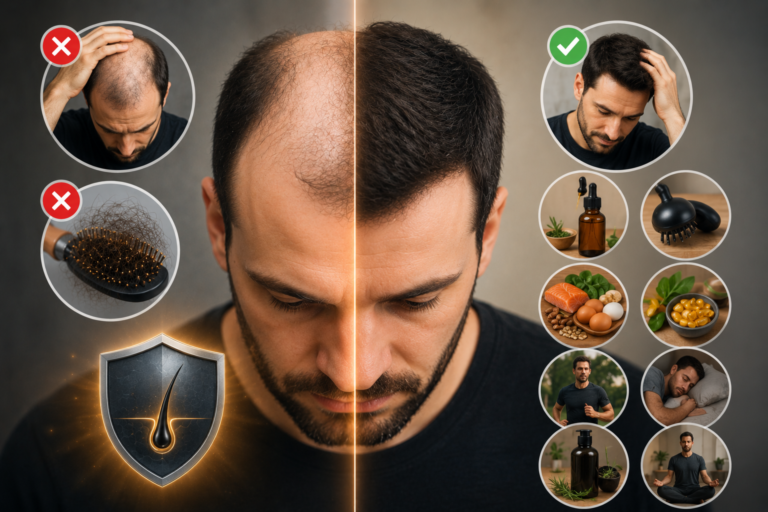
Restoring hair density requires a multi-faceted approach. Rather than relying on a single magic solution, combining lifestyle habits with targeted hair care delivers the best outcomes.
1. Optimize Your Nutrition
Hair is primarily composed of a tough protein called keratin. If your diet lacks protein or essential micronutrients, your body prioritizes vital organs over hair growth. Ensure your diet includes:
- Zinc and Iron: Essential for cellular repair and follicle strength.
- Biotin and B-Complex Vitamins: Support healthy hair structure.
- Omega-3 Fatty Acids: Reduce scalp inflammation and support hydration.
2. Stimulate Scalp Microcirculation
Blood flow brings essential oxygen and nutrients to the hair roots. Regular scalp massages using your fingertips for 3–5 minutes daily can help stimulate circulation around dormant follicles.
3. Switch to a Specialized Hair Density Shampoo
Regular grocery store shampoos often contain harsh detergents (like SLS) that strip the scalp of natural oils and leave behind residue. Swapping to a dedicated anti-hair loss shampoo can transform your daily baseline care.
Look for modern formulas that do more than just clean. Advanced options utilize biopolymer technology to encapsulate active ingredients, helping them stick to the scalp longer and penetrate effectively to improve microcirculation.
Instead of harsh chemicals, choose gentle daily formulas that strengthen existing strands, reduce daily shedding, and support thicker-looking hair from the root.
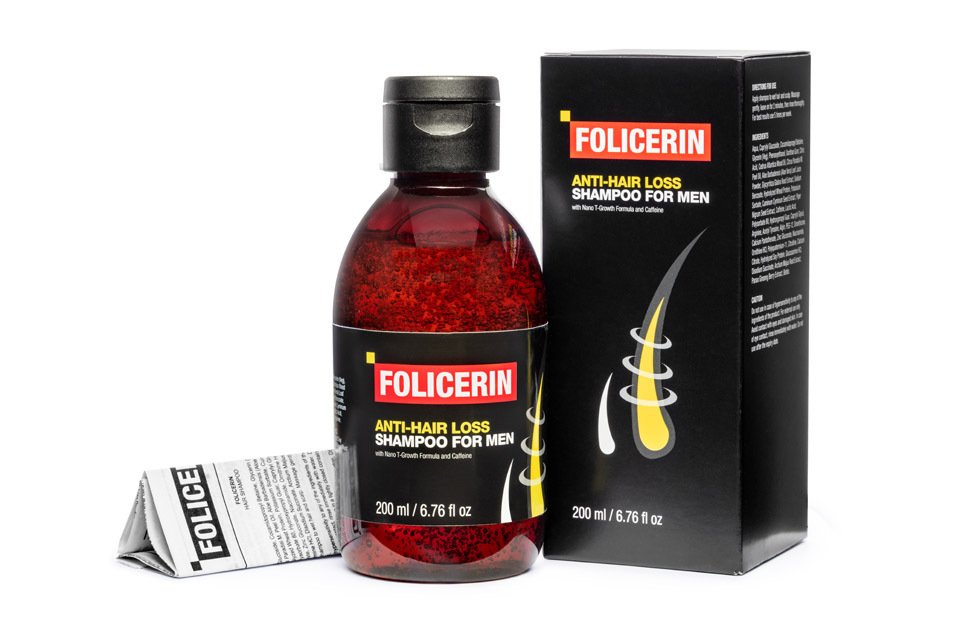
(Many men choose Folicerin because it combines deep daily cleansing with modern biopolymer technology designed to support stronger-looking hair.)
Building a Daily Hair Care Routine That Works
Consistency is the absolute secret to managing hair health. A complex ten-step routine is hard to maintain, but a simple daily habit fits seamlessly into your life.
Here is a straightforward daily routine you can follow:
- Morning/Shower: Wash your hair with a gentle, circulation-supporting shampoo. Massage it thoroughly into your scalp with your fingertips and let it sit for 2–3 minutes before rinsing.
- Post-Shower: Gently pat your hair dry with a towel. Avoid aggressive rubbing, which can snap fragile, thinning strands.
- Dietary Habits: Stay hydrated throughout the day and include a high-protein breakfast to fuel keratin production.
- Evening: Spend 2 minutes doing a light scalp massage to release tension and encourage nocturnal tissue repair.
Rather than trying complicated treatments that take hours, upgrading your daily shower shampoo is one of the easiest ways to stick to a long-term plan.
(Taking control of your hair care routine early gives your scalp the continuous support it needs to thrive.)
Frequently Asked Questions (FAQ)
1. How long does it take to see results when treating thinning hair?
Hair grows slowly—typically about half an inch per month. When starting a new hair care routine or topical regimen, it usually takes 3 to 6 months of consistent daily use to observe visible changes in hair density and reduced shedding.
2. Can stress cause permanent hair loss?
Stress usually triggers a temporary form of hair shedding called Telogen Effluvium. Once the underlying stress is managed and proper scalp care is provided, hair typically begins to regain its density over 6 to 9 months.
3. Is daily shampooing bad for thinning hair?
Not if you use the right product. Washing daily with harsh, drying shampoos can strip your scalp. However, using a safe, gentle, specialized anti-hair loss shampoo daily helps remove excess DHT-laden sebum and product buildup, creating a cleaner environment for growth.
4. Can wearing hats make my hair thin faster?
No, wearing hats does not cause hair loss unless the hat is excessively tight, causing mechanical tension on the roots (traction alopecia). Normal hat use will not cause male pattern baldness.
5. At what age does hair thinning usually start in men?
Hair thinning can begin anytime after puberty. Around 20% of men experience noticeable hair thinning by age 20, 30% by age 30, and up to 50% by age 50.
6. Do anti-hair loss shampoos really help?
Yes, high-quality shampoos play an important supportive role. While they do not alter genetics, modern formulations thoroughly clean the scalp, deliver active nutrients, improve microcirculation, and help existing hair look thicker and fuller.
Conclusion
Losing hair density can feel overwhelming, but thinning hair does not have to be your permanent reality. By understanding how hair miniaturization works and recognizing that dormant follicles can often be revitalized, you can take practical, confident steps forward today.
The key to preserving and improving your hair density lies in early, consistent action. Small changes—like optimizing your nutrition, managing daily stress, and upgrading to a specialized daily shampoo—can make a significant difference over time.
Do not wait for thinning to become more noticeable before taking action. Give your scalp the daily support, nourishment, and care it needs to maintain stronger, healthier, and thicker-looking hair starting today.
(Ready to upgrade your daily shower routine? Check out Folicerin today to give your hair the modern, gentle care it deserves.)