Can Hair Loss Be Reversed? The Truth About What Really Works
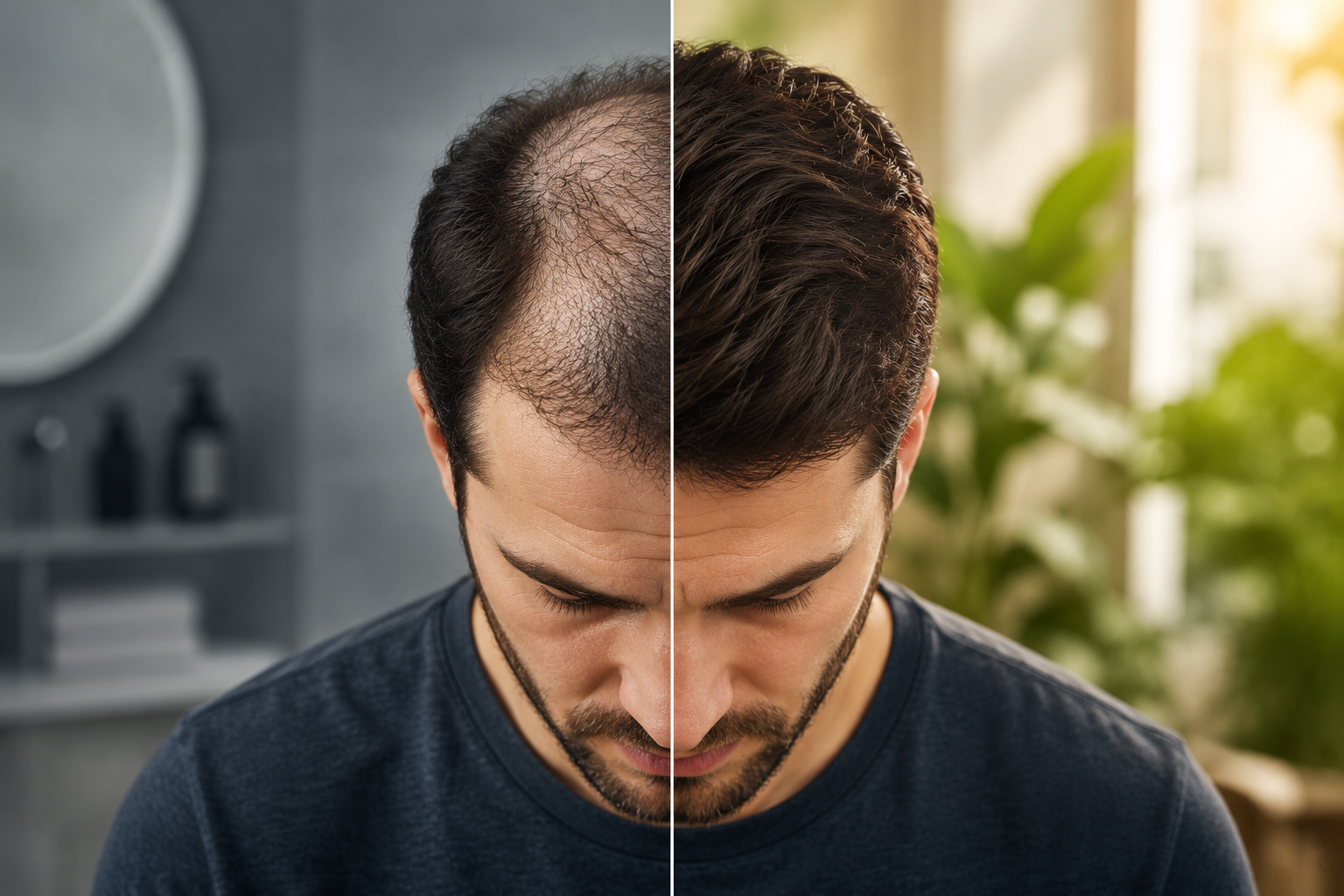
Noticing extra hair strands in your shower drain brings a sudden feeling of panic. You look in the bathroom mirror each morning and check your hairline. Photos suddenly make you feel self-conscious about noticeable thinning.
You are not alone in this experience. Millions of men face hair thinning and feel like they are aging too quickly. It is frustrating to spend money on products that deliver zero results while watching your hair gradually lose its volume.
The good news is that hair loss does not always mean permanent baldness. Understanding the root causes of hair thinning helps you take control of your scalp health. This guide breaks down how hair growth works, what causes hair fall, and how you can support stronger, thicker-looking hair starting today.
Table of Contents
- Understanding the Hair Growth Cycle
- What Causes Hair Loss in Men?
- Can Hair Loss Truly Be Reversed?
- What Happens If You Ignore Hair Thinning?
- Evidence-Based Treatments for Hair Loss
- Daily Scalp Care and Lifestyle Changes
- Targeted Nutritional Support for Hair Growth
- Conclusion
- Frequently Asked Questions
- Medical Disclaimer
Understanding the Hair Growth Cycle
To fix thinning hair, you must first understand how hair actually grows. Every single strand on your head goes through four distinct phases.
- Anagen (Growth Phase): Your hair grows actively for two to six years.
- Catagen (Transition Phase): Growth stops and the hair follicle shrinks over two weeks.
- Telogen (Resting Phase): The hair rests for about three months while new hair begins forming underneath.
- Exogen (Shedding Phase): Old hair falls out naturally to make room for new growth.
Shedding 50 to 100 strands a day is completely normal. However, problems start when hair follicles shrink permanently or stay stuck in the resting phase.
What Causes Hair Loss in Men?
Hair loss rarely happens for just one reason. Multiple factors usually combine to disrupt your normal growth cycle.
Genetic Predisposition
Androgenetic alopecia, commonly known as male pattern baldness, is the primary driver of hair loss. Genes inherited from your parents determine how sensitive your hair follicles are to specific hormones.
Dihydrotestosterone (DHT)
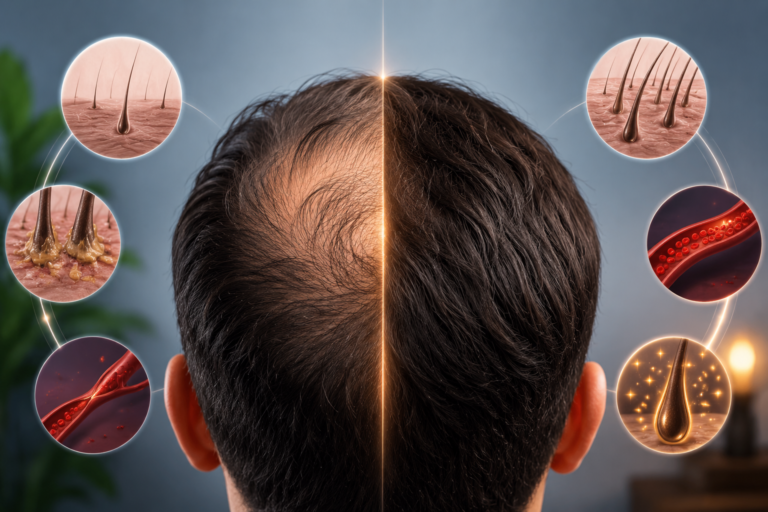
Testosterone converts naturally into a potent androgen called dihydrotestosterone (DHT). High sensitivity to DHT binds to hair follicles on your scalp. Over time, DHT starves these follicles of essential nutrients, causing them to shrink and produce thinner strands until growth stops entirely.

Nutritional Deficiencies
Hair cells are among the fastest-growing cells in the human body. Missing essential vitamins, minerals, and proteins starves your follicles, leading to premature shedding and brittle hair texture.
High Stress Levels
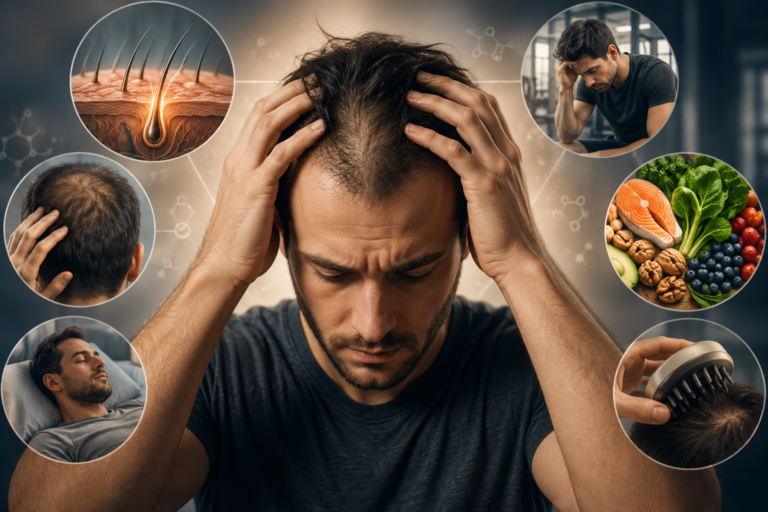
Physical or emotional stress pushes large numbers of hair follicles into a sudden resting phase. Months after a stressful event, you might notice sudden diffuse thinning across your entire scalp.
Can Hair Loss Truly Be Reversed?
The direct answer depends entirely on the state of your hair follicles.
If a hair follicle has completely closed, scarred, or stopped producing hair for years, true reversal is unlikely without surgical intervention. However, if your follicles are merely dormant, miniaturized, or weakened, you can stimulate them back into an active growth state.
Early action makes the crucial difference. Reversing hair loss means stopping excessive shedding, reactivating sleeping follicles, and nourishing existing hair to grow thicker and stronger.
What Happens If You Ignore Hair Thinning?
Ignoring hair loss usually allows follicle miniaturization to continue unchecked. Over time, DHT weakens the root structure further until the follicle loses its capacity to sprout hair.
Delaying care narrows your available options. What begins as minor recession at the temples or light crown thinning can eventually turn into permanent hair loss.
Taking action early gives you the best chance to preserve your natural hair density. Simple daily habits and targeted nutrients help maintain optimal scalp conditions before follicles become inactive.
Evidence-Based Treatments for Hair Loss
Medical science offers several well-researched options to slow down shedding and restart growth.
Topical Treatments
Over-the-counter topical liquids and foams help increase blood circulation to the scalp. Better blood flow delivers vital oxygen and nutrients directly to starving hair roots.
Oral Medications
Prescription oral treatments work internally to lower DHT production. By reducing DHT levels in the bloodstream, these treatments protect sensitive follicles from shrinking.
Clinical Therapies
Low-level laser therapy (LLLT) and platelet-rich plasma (PRP) injections are modern options used by dermatologists to energize dormant follicles and stimulate cellular activity.
Daily Scalp Care and Lifestyle Changes
Medical treatments work best when supported by a healthy routine. Small daily adjustments accumulate into big long-term improvements for your hair health.
- Improve Scalp Circulation: Gently massage your scalp daily with your fingertips to encourage localized blood flow.
- Reduce High Heat: Avoid hot blow dryers and harsh chemical styling products that weaken hair shafts.
- Manage Daily Stress: Practice regular exercise and ensure quality sleep to keep stress hormones balanced.
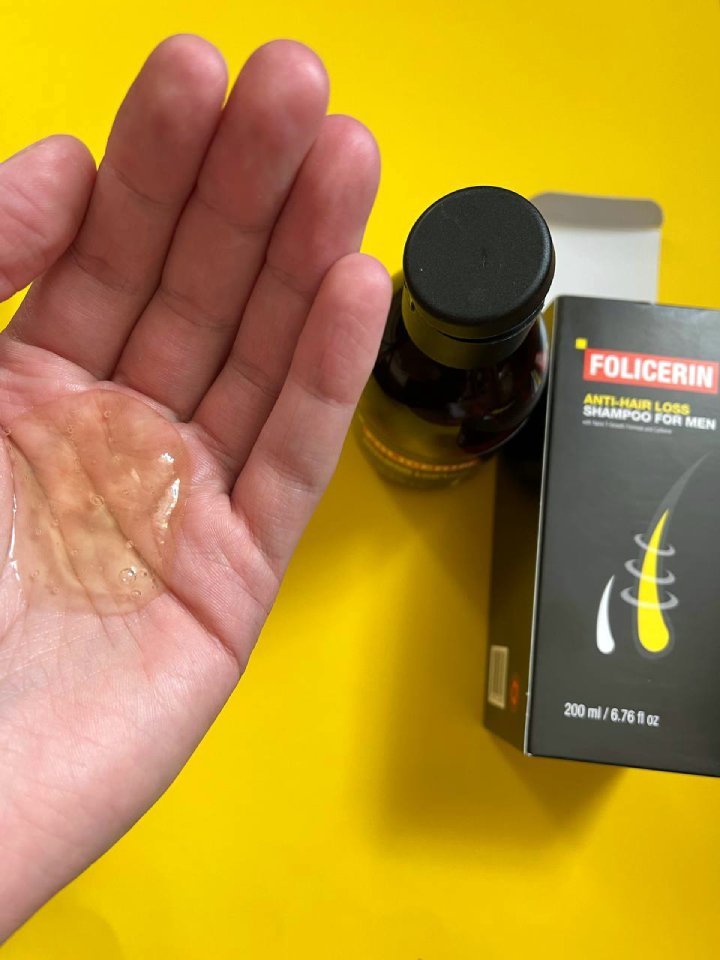
- Use Gentle Cleansers: Cleanse your scalp regularly to remove excess sebum and DHT buildup without stripping natural moisture.
Targeted Nutritional Support for Hair Growth
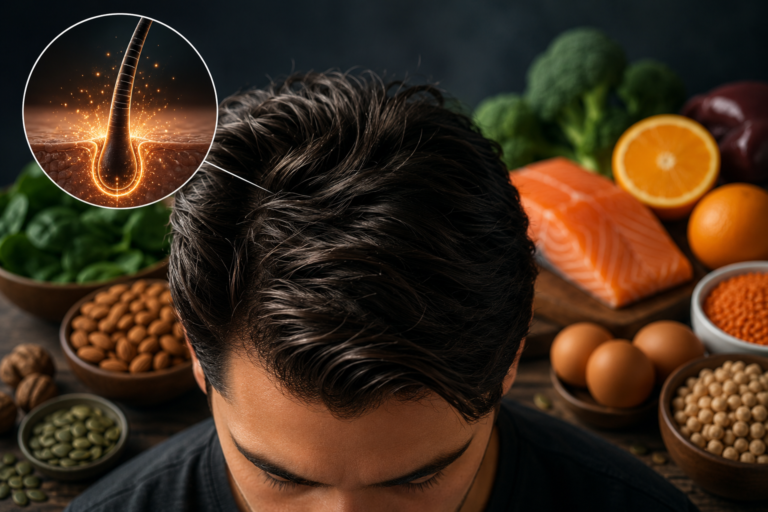
Your hair reflects your internal health. Consuming specific vitamins and botanical extracts helps combat baldness, supports new growth, and improves overall scalp condition.
Key nutrients that support hair health include:
- Biotin and Zinc: Essential minerals that maintain normal hair structure and scalp tissue health.
- Plant Extracts: Ingredients that help counteract follicle shrinkage and support natural hair pigmentation.
- Hormone-Balancing Compounds: Nutrients that help maintain optimal blood testosterone levels safely.
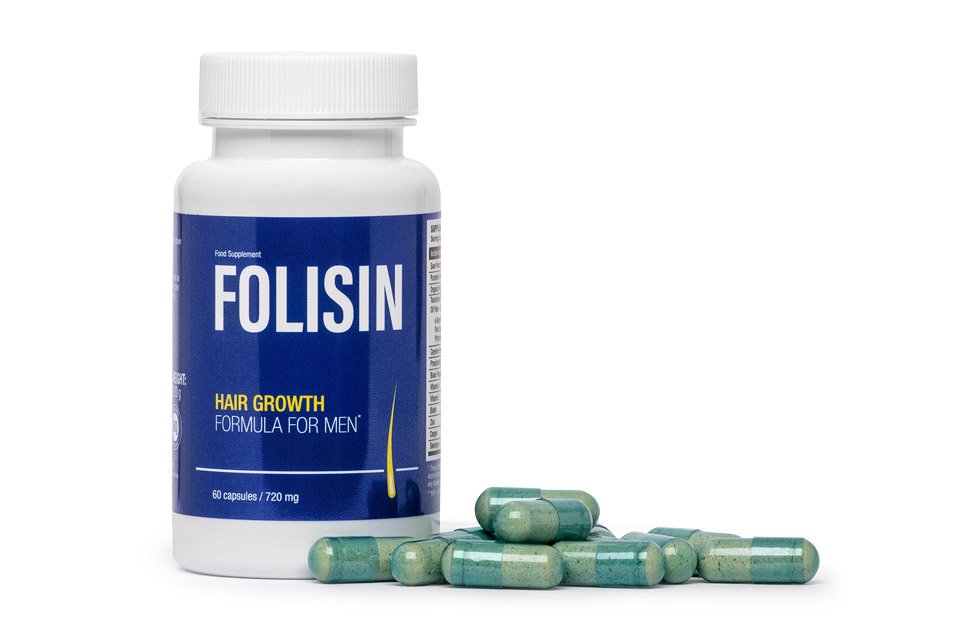
Supplements designed specifically for male hair loss combine these essential ingredients into convenient daily doses.

Conclusion
Can hair loss be reversed? Yes, provided you act while your hair follicles are still active and capable of producing hair.
Restoring hair density requires patience, consistency, and a multi-pronged approach. By understanding the causes of hair loss, protecting your scalp, and providing your body with essential nutrients, you can take back control of your hair health.
Do not wait for hair thinning to become severe. Take a proactive approach today to protect your natural hair, boost your confidence, and feel great in your own skin.
Frequently Asked Questions
Can dead hair follicles come back to life?
No, completely dead or scarred hair follicles cannot regenerate naturally. However, dormant or miniaturized follicles can often be reactivated with proper care and nutrition.
How long does it take to see results from hair loss treatments?
Hair grows slowly, typically about half an inch per month. Most people notice initial changes in shedding and hair texture within three to six months of consistent treatment.
Does stress cause permanent hair loss?
Stress-related hair loss, known as telogen effluvium, is usually temporary. Hair generally regrows once stress levels normalize and proper nutritional balance is restored.
Can diet alone reverse hair loss?
A balanced diet supports overall hair health, but diet alone may not overcome genetic hair loss caused by DHT sensitivity. It is best used alongside targeted therapies.
Does washing hair too often cause hair fall?
Washing your hair does not cause hair loss. The strands you see in the drain were already detached from the follicle and ready to shed during your normal exogen phase.
Is hair thinning more reversible in the crown or receding hairline?
Hair loss at the crown generally responds better to treatments than a receding hairline because crown follicles often retain better blood supply and viability.
Can supplements help with hair loss in men?
Yes, high-quality supplements supplying key vitamins, minerals, and plant extracts help provide the nutrients needed to block DHT effects and support healthier hair growth.