Hair Thinning in Men: Early Signs You Should Know
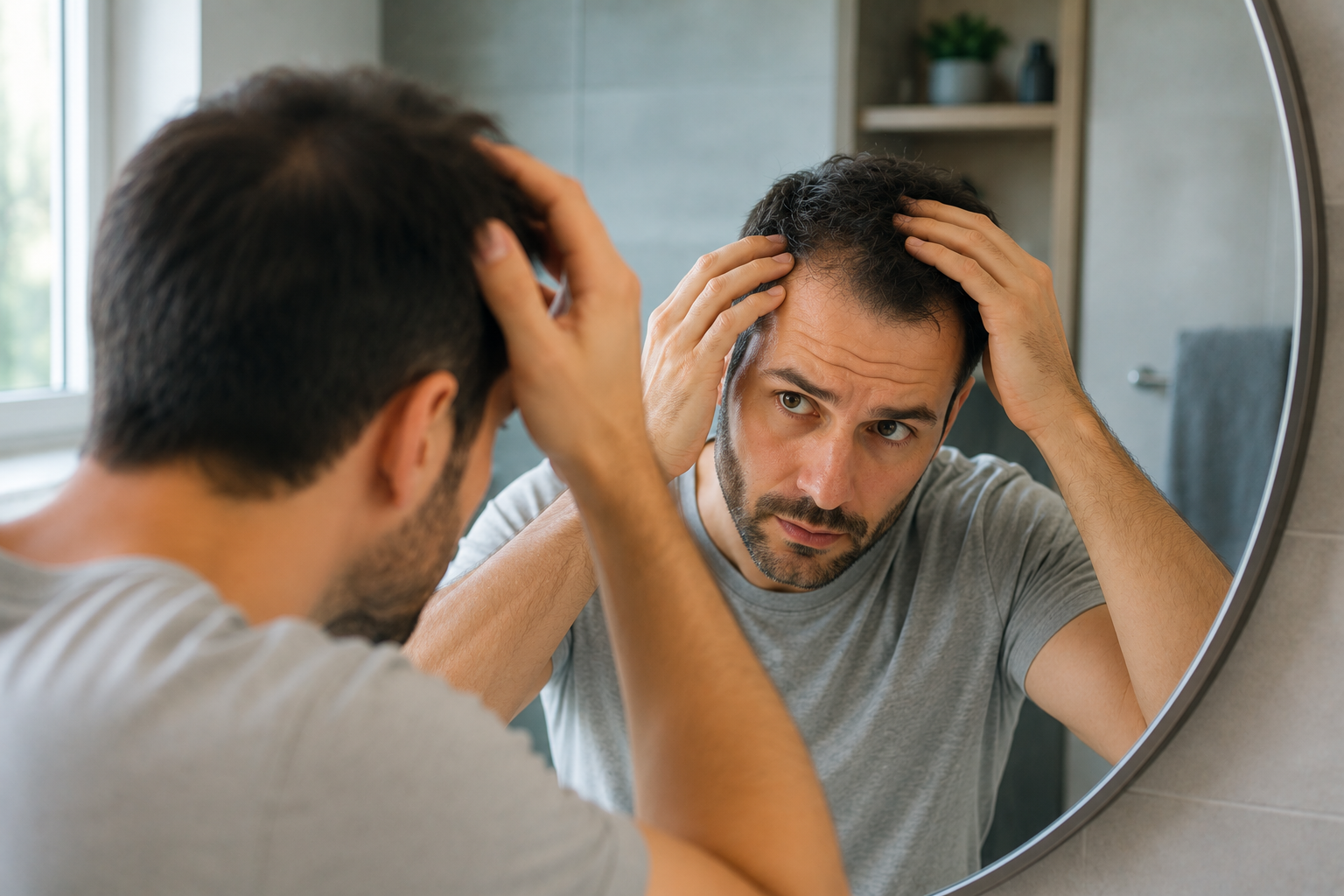
Noticing that your hair looks thinner than it used to can be unsettling.
Sometimes the change is so gradual that you may not notice it at first.
You might simply see a little more scalp when your hair is wet, notice that your hairstyle no longer looks as full, or realize that your hairline has changed.
Hair thinning can happen for many reasons.
For men, hereditary hair loss is one of the most common causes and often follows a recognizable pattern involving the hairline, top of the scalp, or crown.
Knowing the early signs can help you understand whether you’re simply experiencing normal shedding or whether your overall hair density may be changing.
What Does Hair Thinning Actually Mean?
Hair thinning means that the overall density or thickness of your hair is decreasing.
This can happen gradually.
Instead of suddenly losing large amounts of hair, you may notice that individual strands appear finer or that more of your scalp becomes visible.
Normal hair shedding is different.
The American Academy of Dermatology notes that losing around 50 to 100 hairs per day can be normal.
The more important question is whether your hair is becoming visibly less dense over time.
1. Your Hairline Starts to Recede
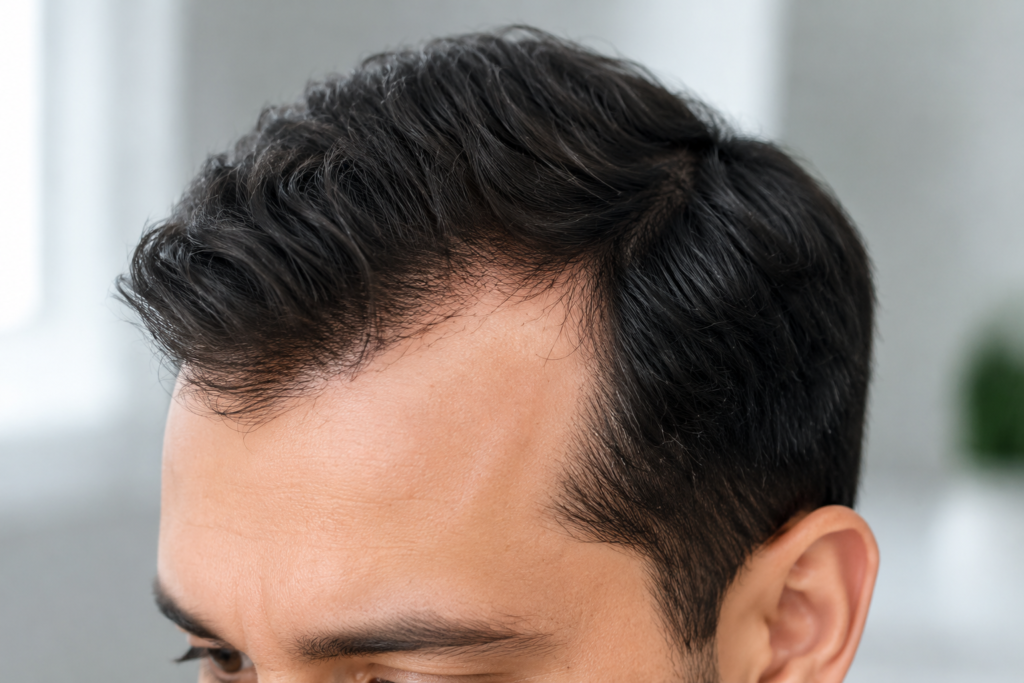
One of the most recognizable early signs of male pattern hair loss is a changing hairline.
You may notice that the corners near your temples are moving backward.
At first, the change can be subtle.
You might only notice it when comparing older photographs with recent ones.
Over time, the recession can become more noticeable.
A receding hairline is one of the common patterns associated with hereditary hair loss in men.
2. More Scalp Becomes Visible at the Crown
Another common sign is thinning around the crown, which is the area toward the back and top of the head.
You may notice it when looking at photographs taken from above or when standing under bright lighting.
The hair may still be present, but the scalp can become increasingly visible as density decreases.
In men with hereditary hair loss, thinning can occur at the crown and top of the scalp.
3. Your Hair Looks Thinner When Wet
Wet hair naturally looks flatter because the strands stick together.
However, if you suddenly notice much more scalp visibility than before when your hair is wet, it may be worth paying attention to the change.
Don’t use this observation alone to diagnose hair loss.
Instead, compare how your hair looks over several weeks or months.
A gradual change in density is more informative than one day when your hair happens to look thinner.
4. Individual Hair Strands Become Finer
Hair thinning does not always mean that large amounts of hair are falling out.
In hereditary hair loss, susceptible follicles can gradually become smaller and produce finer hairs.
As a result, you may still have plenty of hair on your head but notice that the individual strands don’t seem as thick as they used to be.
This can make the overall hairstyle look less dense.
5. Your Hairstyle Doesn’t Look as Full
Sometimes the first sign is simply cosmetic.
A hairstyle that used to look thick and full may begin to look flatter.
You may find yourself using more styling products or changing how you comb your hair to cover certain areas.
This doesn’t automatically mean you’re losing hair.
Hair texture, length, styling habits, and lighting can all affect how dense your hair appears.
However, if the change continues over time, it’s worth paying attention to.

6. You Notice More Hair on Your Pillow or Brush
Seeing loose hairs can make you immediately think that you’re going bald.
But some daily shedding is completely normal.
The AAD explains that people normally lose some hair every day as part of the natural hair-growth cycle.
The number of loose hairs alone therefore doesn’t tell you whether you have progressive hair loss.
Instead, look for other changes such as:
- A receding hairline
- A widening area of visible scalp
- Thinning at the crown
- Overall reduction in hair density
- Noticeably finer strands
These changes are more useful when evaluating whether your hair is actually becoming thinner.
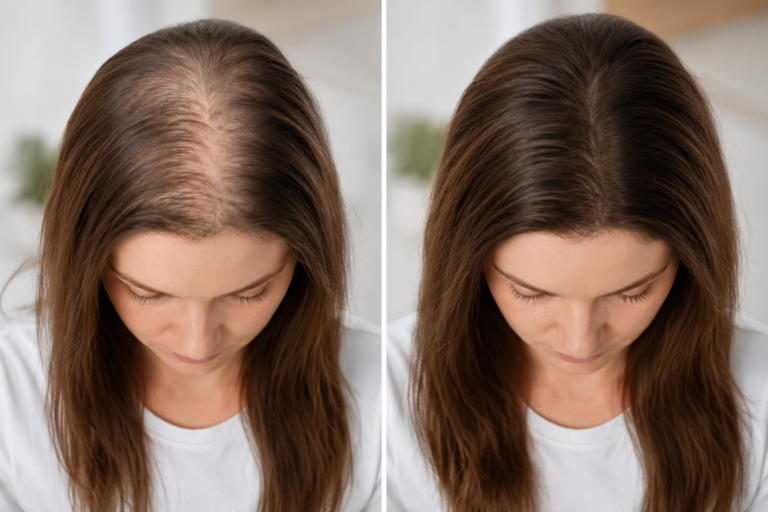
7. Your Hair Part Looks Wider
Although a widening part is more commonly discussed in women, changes in the way hair separates can also make thinning more noticeable.
The important point is that the scalp becomes easier to see because there is less hair density covering it.
If you notice a persistent change rather than a temporary styling difference, consider monitoring it over time.
8. The Change Happens Gradually
One of the characteristics of hereditary hair loss is that it often develops slowly.
You may not notice a dramatic difference from one month to the next.
Instead, the change becomes obvious when you compare photographs taken months or years apart.
The AAD notes that hair-loss signs can be subtle and may develop gradually.
This is why taking occasional photographs under similar lighting can sometimes help you notice changes that are otherwise difficult to see.
9. Hair Loss Follows a Pattern
The pattern of hair loss can provide useful information.
For men, hereditary hair loss commonly affects:
- The front hairline
- The temples
- The top of the scalp
- The crown
The pattern can be different from person to person, but the location and progression can provide useful clues.
A dermatologist can evaluate the pattern and determine whether it is consistent with hereditary hair loss or another condition.
10. The Change Continues Over Time
One of the most important things to watch is progression.
If your hair looks slightly thinner today, that doesn’t necessarily mean you’re developing a permanent hair-loss condition.
But if the thinning continues month after month, the change becomes more significant.
Progressive thinning is one reason why identifying the underlying cause can be useful.
Early evaluation can be especially important for certain types of hair loss because treatment may work better when started earlier.
Hair Thinning vs Normal Hair Shedding
These two things are not exactly the same.
Hair shedding means individual hairs are falling out.
Some daily shedding is normal.
Hair thinning means the overall density or thickness of the hair is decreasing.
You can therefore experience normal daily shedding without developing progressive hair loss.
On the other hand, someone experiencing hereditary hair loss may not notice dramatic shedding at all.
The more useful question is:
Is the overall amount of hair on my scalp changing?
What Can Cause Hair Thinning in Men?
Hereditary hair loss is a major cause, but it is not the only possibility.
Other causes can include:
- Significant stress
- Illness
- Nutritional deficiencies
- Thyroid problems
- Certain medications
- Scalp conditions
- Hair damage
- Alopecia areata
- Other medical conditions
The AAD emphasizes that hair loss has many possible causes and that identifying the cause is important for choosing an appropriate approach.
What Should You Do If You Notice Thinning?
Don’t panic after noticing a few extra hairs.
Instead, look for a consistent pattern.
You can:
- Take photographs every few months
- Use similar lighting when comparing photos
- Pay attention to your hairline
- Check the crown occasionally
- Avoid aggressive hair styling
- Maintain a balanced diet
- Handle your hair gently
- Pay attention to scalp symptoms
If the thinning continues or becomes noticeable, consider speaking with a dermatologist.
A professional can examine the scalp and hair pattern and help determine the possible cause.
Can Hair Thinning Be Reversed?
That depends entirely on the cause.
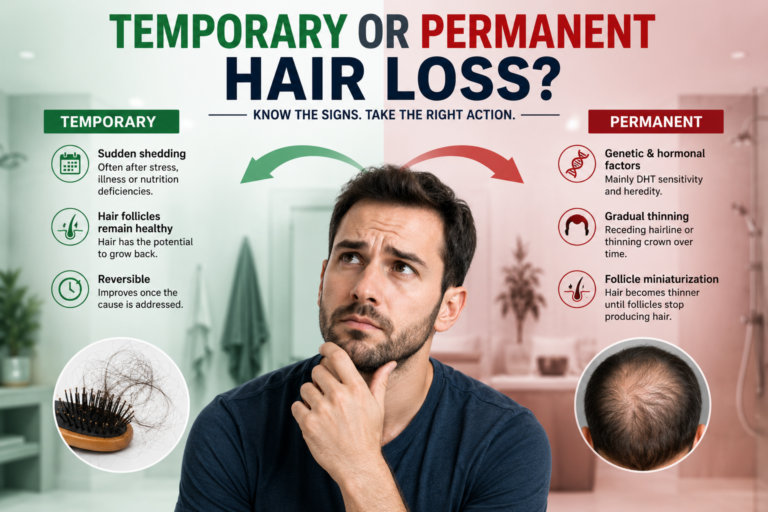
Some types of hair shedding are temporary and may improve when the underlying trigger resolves.
Other forms of hair loss, including hereditary hair loss, may require treatment to slow progression or improve hair growth.
The NHS notes that some hair-loss conditions are temporary while others, such as male and female pattern baldness, can be permanent.
This is another reason why identifying the cause is more useful than simply trying random products.
When Should You See a Dermatologist?
Consider professional evaluation if you notice:
- Rapid hair loss
- A sudden bald patch
- Significant thinning at the crown
- A rapidly receding hairline
- Persistent scalp itching
- Burning or pain
- Redness or inflammation
- Scaling or unusual scalp changes
- Hair loss affecting your eyebrows or beard
- Progressive thinning that concerns you
The AAD recommends getting the cause of hair loss identified because different causes can require different approaches.
Frequently Asked Questions
What is the first sign of hair thinning in men?
For men with hereditary hair loss, a receding hairline or thinning at the top or crown can be an early sign.
Is it normal to lose hair every day?
Yes. Losing some hair every day is part of the normal hair-growth cycle. The AAD states that around 50 to 100 hairs per day can be normal.
Does seeing more scalp mean I’m going bald?
Not necessarily. Lighting, wet hair, hairstyle, hair texture, and hair length can all affect how visible your scalp appears.
However, persistent changes in hair density can be a sign of hair loss.
Can stress make hair thinner?
Significant stress can trigger increased hair shedding in some people. The underlying cause and timing are important when evaluating the change.
Does male pattern hair loss affect the crown?
Yes. In men, hereditary hair loss can affect the hairline, top of the scalp, and crown.
Should I take hair supplements if my hair is thinning?
Not automatically.
Some nutritional deficiencies can contribute to hair loss, but taking high doses of supplements without knowing whether you have a deficiency is not necessarily helpful.
It’s better to discuss possible deficiencies with a healthcare professional.
Can hair thinning stop on its own?
Some forms of shedding can improve when the underlying trigger goes away.
Other types of hair loss can continue without treatment.
The cause makes the difference.
Final Thoughts
Hair thinning in men can begin so gradually that it’s easy to overlook the early signs.
A slightly receding hairline, increased scalp visibility at the crown, finer hair strands, or a gradual reduction in hair density can all be clues that your hair is changing.
At the same time, seeing a few loose hairs does not automatically mean that you’re going bald.
Normal shedding is part of the hair-growth cycle.
The most useful thing you can do is pay attention to patterns and changes over time.
If your hair continues to become thinner, develops sudden bald patches, or changes alongside scalp symptoms, consider getting the cause evaluated by a dermatologist.
Understanding what’s causing the thinning is the first step toward deciding what, if anything, you should do about it.