Why Is My Hair Getting Thinner? 9 Possible Reasons
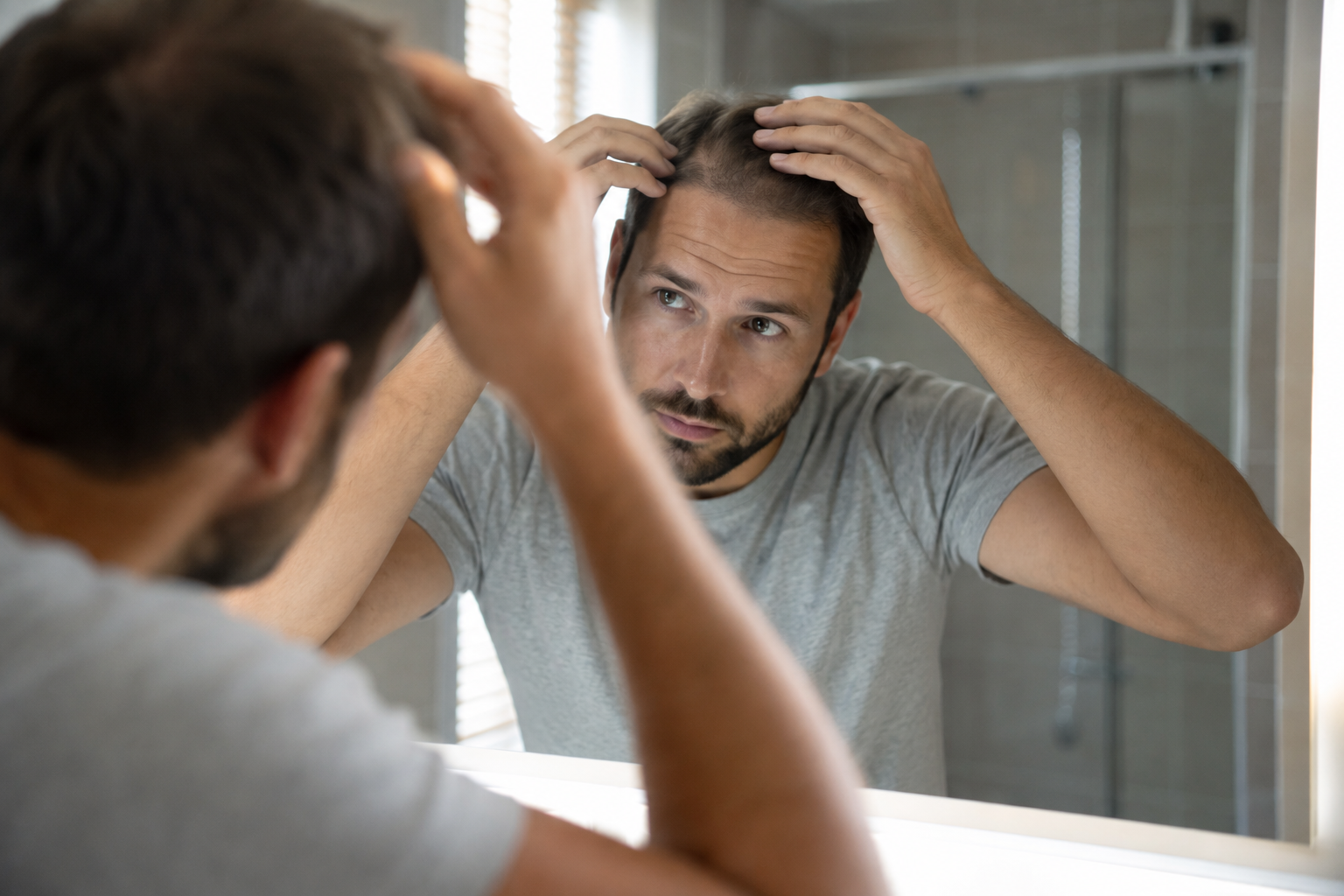
Noticing that your hair looks thinner than it used to can be worrying.
Maybe your hairline looks slightly different, your crown seems less full, or you are simply seeing more scalp when your hair is wet.
But thinner hair does not always mean the same thing.
Hair can become thinner because of genetics, stress, illness, nutritional problems, certain medications, scalp conditions, or changes in the way you care for it.
Some causes are temporary, while others can continue without treatment.
The American Academy of Dermatology explains that hair loss has many possible causes, and identifying the cause is an important first step in deciding what to do next.
What Does Thinning Hair Mean?
Hair thinning generally means that there is less visible hair density than before.
You might notice:
- More scalp showing through your hair
- A receding hairline
- A thinner crown
- Finer individual strands
- Less volume when styling your hair
- More noticeable shedding
It is also important to remember that some daily shedding is normal.
The NHS says that losing around 50 to 100 hairs a day can be normal.
The important question is whether your overall hair density is actually changing over time.
1. Hereditary Hair Loss
One of the most common reasons for thinning hair is hereditary hair loss.
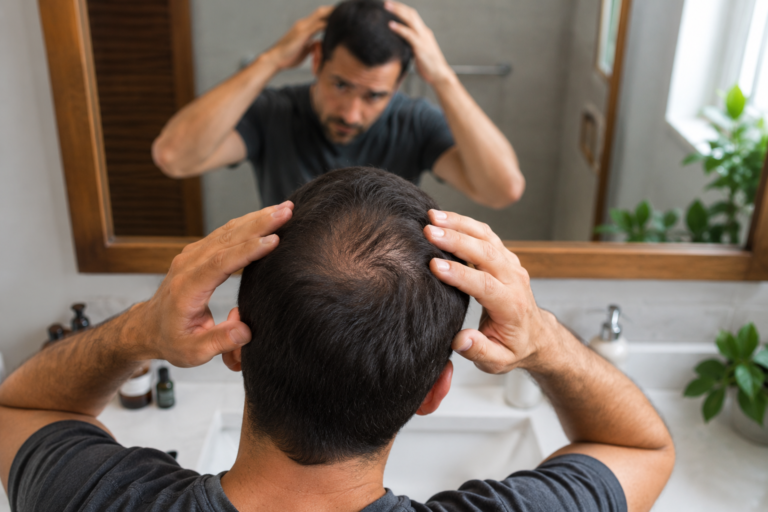
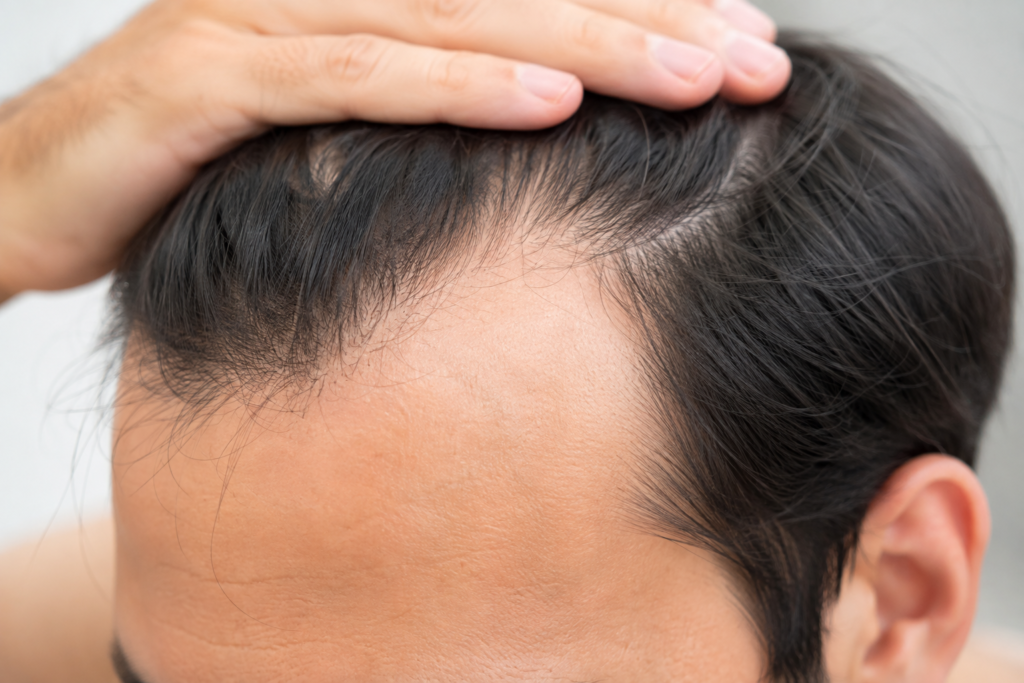
In men, this is often called male pattern hair loss.
It can begin with a receding hairline or a thinning area on the top of the head and may gradually progress over the years.
Because the change can be slow, you might not notice it immediately.
Comparing recent photographs with older photographs can sometimes make the progression easier to see.
2. Stress
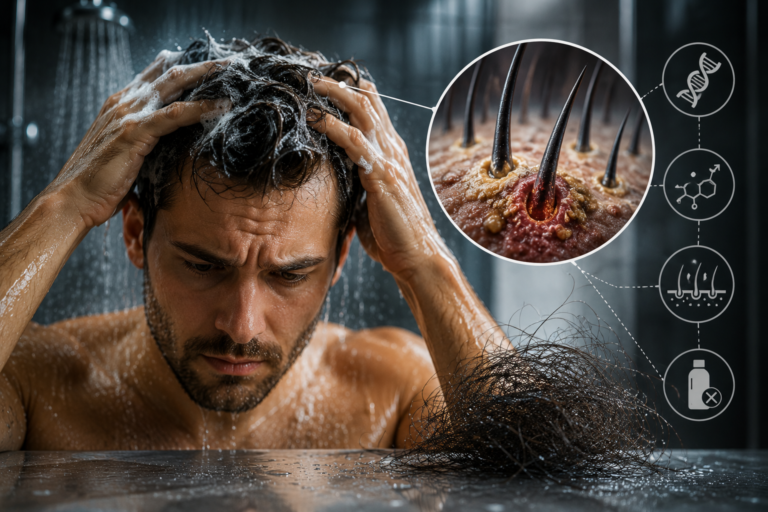
Significant stress can sometimes be followed by increased hair shedding.
This type of shedding may happen after a stressful period rather than immediately during it.
The AAD explains that excessive shedding can occur after significant stress and may also follow illness, surgery, high fever, or major weight loss.
This can make the connection difficult to recognize.
Someone may experience a stressful event and only notice increased shedding several months later.
In many cases, this type of excessive shedding can improve once the body readjusts and the underlying trigger is no longer present.
3. Recent Illness
A significant illness can sometimes affect the normal hair-growth cycle.
You may notice increased shedding after recovering from an illness rather than while you are sick.
According to the AAD, increased shedding can occur a few months after recovering from an illness or experiencing another major physical stressor.
This type of hair shedding can be temporary.
However, persistent thinning should still be evaluated rather than automatically attributed to a previous illness.
4. Weight Loss or Changes in Diet
Major weight loss or inadequate nutrition can affect hair growth.
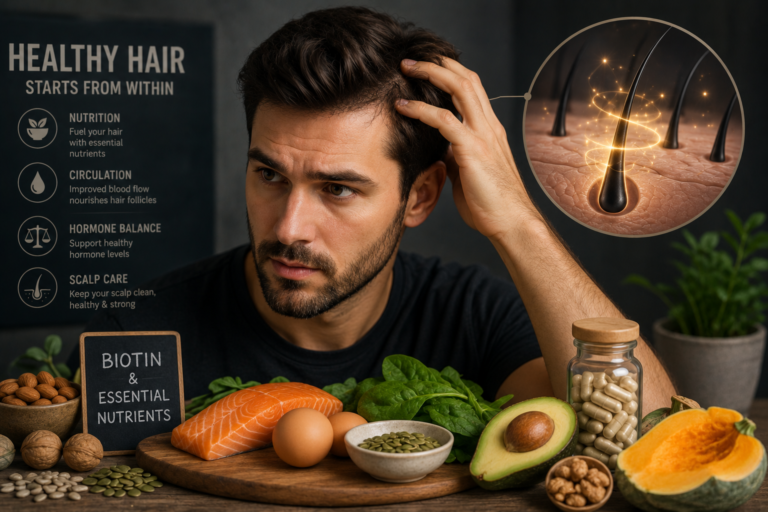
The AAD lists significant weight loss and insufficient amounts of certain nutrients, including iron, protein, zinc, and biotin, among possible contributors to hair loss.
This does not mean that everyone with thinning hair needs supplements.
Taking large amounts of vitamins or minerals without knowing whether you have a deficiency is not necessarily helpful.
If you suspect that your diet may be contributing to hair loss, discussing your diet and possible deficiencies with a healthcare professional is a better approach.
5. Iron or Other Nutritional Deficiencies
Your body needs adequate nutrients to support normal hair growth.
The AAD notes that too little iron, protein, zinc, or biotin can contribute to noticeable hair loss.
However, nutritional deficiencies are only one possible cause.
If you are experiencing significant hair loss, it is better to determine whether a deficiency actually exists rather than automatically taking supplements.
6. Thyroid Problems
Changes in thyroid function can sometimes affect hair.
The AAD lists thyroid disease as one possible cause of hair thinning and hair loss.
Some people may notice overall thinning, while others may notice increased shedding.
If thinning hair appears alongside other unexplained changes in your health, discussing the symptoms with a healthcare professional can help determine whether further evaluation is appropriate.
7. Certain Medications
Some medications can contribute to hair loss.
This does not mean that every person taking a particular medication will lose hair.
The effect can depend on the medication, dose, individual circumstances, and underlying health condition.
If you think a medication may be related to your hair loss, do not stop taking it on your own.
Instead, speak with the healthcare professional who prescribed it.
8. Hair Damage and Hair-Care Habits
Sometimes the problem is not only what’s happening inside the body.
The way you treat your hair can also contribute to damage.
Frequent chemical treatments, excessive heat, aggressive brushing, and hairstyles that pull tightly on the hair can cause damage and, in some cases, contribute to hair loss.
If your hair is already fragile, gentle handling becomes even more important.
You can reduce unnecessary stress on your hair by:
- Avoiding very tight hairstyles
- Reducing excessive heat
- Brushing gently
- Avoiding aggressive scalp scratching
- Being careful with wet hair
- Following appropriate hair-care routines
9. Scalp Conditions
Problems affecting the scalp can sometimes be associated with hair loss.
Depending on the condition, you may notice symptoms such as:
- Itching
- Burning
- Redness
- Scaling
- Tenderness
- Sores
- Sudden patches of missing hair
The AAD notes that certain scalp conditions can cause hair loss and that symptoms can provide clues about the underlying cause.
If thinning hair occurs together with significant scalp symptoms, professional evaluation is especially important.
How Can You Tell What Is Causing Your Thinning Hair?
Unfortunately, the appearance of thinning hair alone does not always tell you the cause.
For example, a receding hairline may suggest hereditary hair loss in a man, while sudden shedding after a major illness may point toward a temporary trigger.
Other clues include:
- How quickly the hair loss started
- Where the thinning is happening
- Whether the hairline is changing
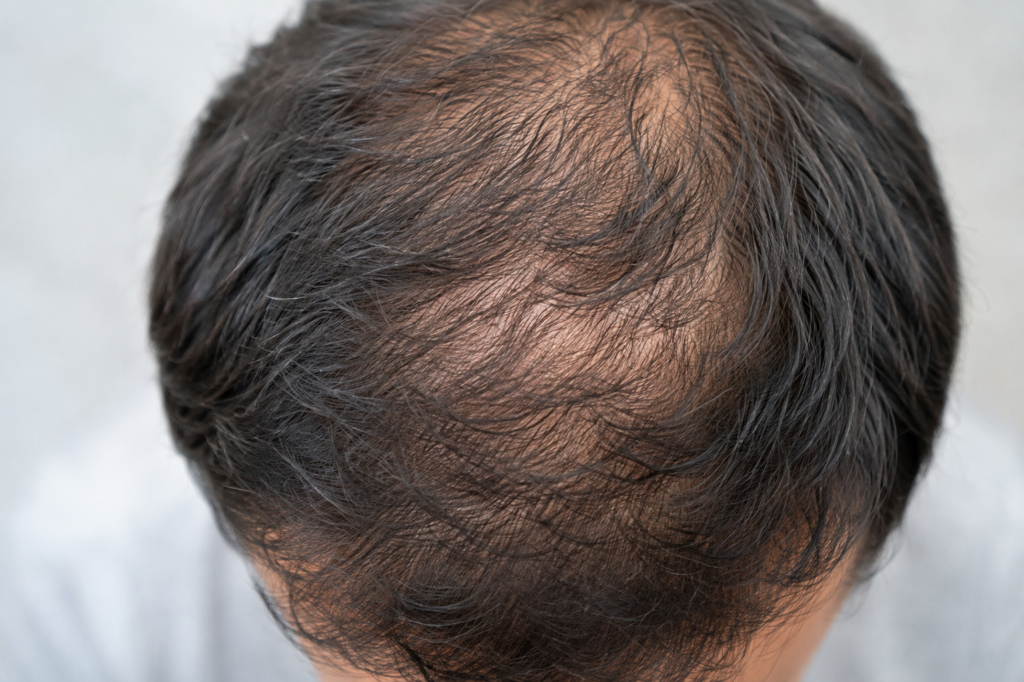
- Whether the crown is becoming thinner
- Whether you have scalp symptoms
- Whether you recently experienced major stress or illness
- Whether you changed your diet
- Whether you started a new medication
The AAD emphasizes that hair loss has many causes and that an accurate diagnosis is important when deciding how to address it.
Is Thinning Hair Always Permanent?
No.
Some types of hair shedding are temporary.
For example, increased shedding after illness, significant stress, or major weight loss may improve after the underlying trigger resolves.
Other forms, such as male pattern hair loss, can continue gradually over time.
The NHS notes that some hair loss is temporary, while pattern baldness can be permanent.
This is why identifying the cause is more useful than assuming that every case of thinning hair will follow the same pattern.
Can Thin Hair Become Thick Again?
That depends on the cause.
If the thinning is related to a temporary trigger, hair may regain some or all of its previous fullness once the underlying problem is resolved.
The AAD notes that some forms of excessive shedding can stop after the body readjusts, with normal fullness returning over time.
For hereditary hair loss, treatment may help slow progression and, for some people, improve regrowth. The AAD notes that earlier treatment tends to produce better results.
What Should You Do If Your Hair Is Getting Thinner?
The first step is not necessarily buying a new product.
Instead, try to understand what changed.
Think about the months before you noticed the thinning.
Did you:
- Experience significant stress?
- Have a serious illness or high fever?
- Lose a lot of weight?
- Change your diet?
- Start a new medication?
- Notice a receding hairline?
- See more scalp at the crown?
- Develop itching or irritation?
You can also take photographs of your hairline and crown under similar lighting every few months.
This can make gradual changes easier to identify.
When Should You See a Dermatologist?
Consider seeking professional advice if you notice:
- Sudden hair loss
- A bald patch appearing quickly
- Rapidly increasing thinning
- A progressively receding hairline
- Noticeable crown thinning
- Hair loss with pain or burning
- Significant scalp itching
- Redness or swelling
- Scaling or sores
- Hair loss affecting your beard or eyebrows
The AAD recommends identifying the cause of hair loss because different causes may require different approaches.
If hair loss is progressing, earlier evaluation can also be useful because some treatments work better when started earlier.
Should You Take Hair Supplements?
Not automatically.
Supplements can make sense when a genuine nutritional deficiency exists, but taking large amounts of vitamins or minerals without knowing whether you need them is not necessarily beneficial.
The goal should be adequate nutrition rather than megadoses.
If you suspect a deficiency, discuss testing and appropriate supplementation with a healthcare professional.
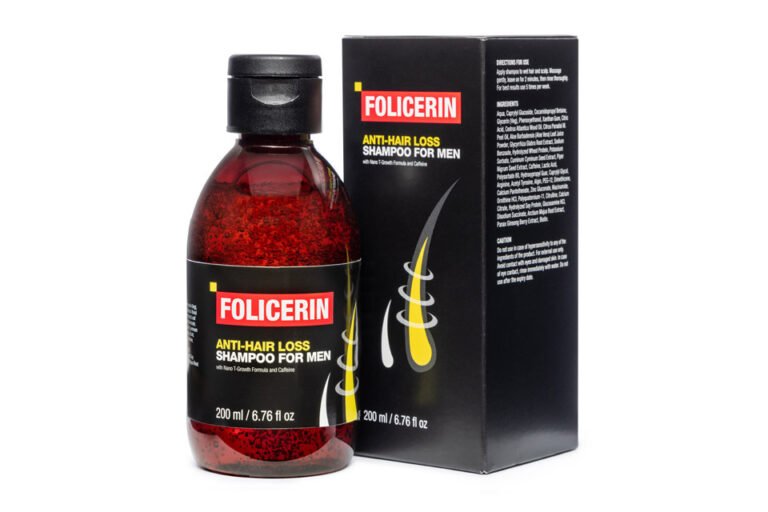
What About Hair Loss Shampoos?
Hair-loss shampoos are often marketed as an easy solution for thinning hair.
However, it’s important to understand their limitations.
The AAD notes that some shampoos can make hair appear fuller or reduce breakage, but they do not regrow hair or prevent hair loss from worsening.
That means shampoo can be part of a hair-care routine, but it should not automatically be considered a treatment for the underlying cause of progressive hair loss.
Frequently Asked Questions
Why is my hair suddenly getting thinner?
Sudden thinning or increased shedding can have several causes, including illness, significant stress, weight loss, nutritional problems, medications, and certain scalp conditions.
Is it normal to lose hair every day?
Yes. Losing around 50 to 100 hairs per day can be normal.
Why is my hairline receding?
A gradually receding hairline is a common early sign of male pattern hair loss, although other causes are possible.
Can stress make your hair thinner?
Significant stress can trigger excessive shedding in some people. This shedding can sometimes improve after the body readjusts.
Can illness cause temporary hair loss?
Yes. Increased shedding can occur after recovering from an illness or another major physical stressor.
Should I take biotin for thinning hair?
Not necessarily. Biotin deficiency can contribute to hair loss, but supplementation is not automatically useful if you are not deficient.
Can hair thinning be reversed?
Sometimes. It depends on the underlying cause. Some temporary forms of shedding can improve, while other types of hair loss may continue without treatment.
Final Thoughts
Thinning hair can happen for many different reasons.
Genetics, stress, illness, nutrition, medications, scalp conditions, and hair-care habits can all play a role.
That is why seeing thinner hair does not automatically mean that you are going bald.
The most useful thing you can do is look at the pattern, timing, and progression of the change.
If your hair is gradually becoming thinner, your hairline is receding, or you are developing a thinning crown, consider getting the cause evaluated.
And if the hair loss is sudden or accompanied by scalp symptoms, professional advice is particularly important.
Understanding why your hair is getting thinner is the first step toward knowing what you can realistically do about it.