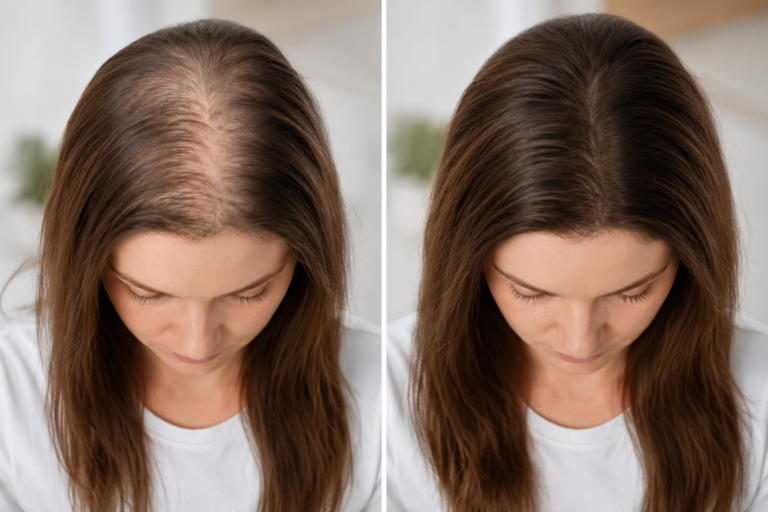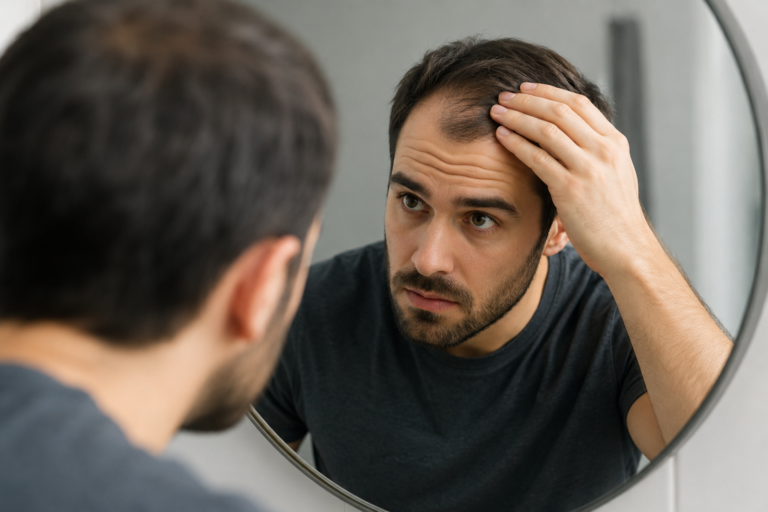
Is Hair Loss Temporary or Permanent? 8 Signs to Know

Seeing more hair fall out than usual can immediately make you wonder whether the hair will grow back.
That question is understandable.
Hair loss does not always mean permanent baldness. Some types of hair shedding are temporary and may improve when the underlying trigger goes away, while other forms of hair loss can continue over time.
The difficult part is that temporary shedding and progressive hair thinning can sometimes look similar at first.
So how can you tell the difference?
There is no single sign that can determine the cause by itself, but looking at the timing, pattern, and progression of the hair loss can provide useful clues.
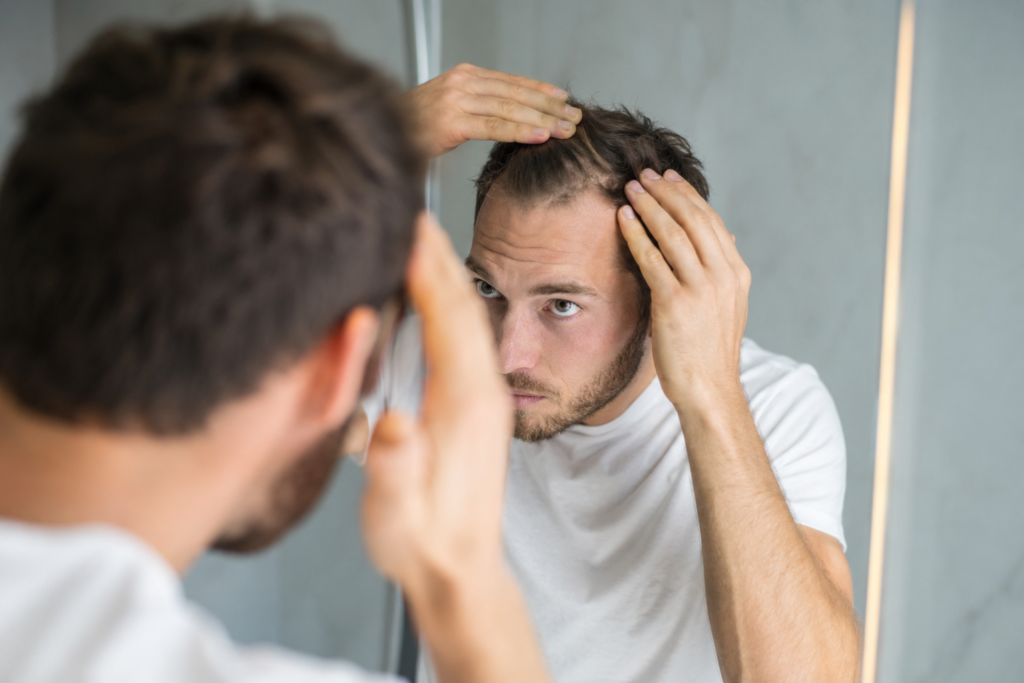
What Is Temporary Hair Loss?
Temporary hair loss usually means that the hair shedding is related to a trigger that can eventually resolve.
Possible triggers include illness, significant stress, major weight loss, iron deficiency, certain medical treatments, and other changes affecting the body.
When the underlying trigger is resolved, hair growth may gradually return.
However, regrowth does not necessarily happen immediately.
Hair grows through different phases, so there can be a delay between the original trigger and the moment you start noticing increased shedding or later regrowth.
What Is Permanent Hair Loss?
Permanent hair loss can happen when the underlying condition continues to affect the hair follicles.
One common example is hereditary or pattern hair loss.
The NHS identifies male and female pattern baldness as types of hair loss that can be permanent and often run in families.
In men, hereditary hair loss can gradually affect the hairline, top of the scalp, and crown.
The process may be so slow that you don’t notice the change immediately.
1. The Hair Loss Started After a Major Stressful Event
A period of significant physical or emotional stress can sometimes be followed by increased hair shedding.
The important detail is the timing.
You may experience the stressful event first and notice increased shedding later.
This can make it difficult to connect the two events.
If the shedding began after a major illness, surgery, significant stress, or another major change, temporary shedding may be one possibility.
However, timing alone cannot confirm the cause.

2. The Hair Shedding Is Spread Across the Scalp
Temporary shedding often appears as an overall increase in loose hairs rather than one clearly defined bald patch.
You might notice more hair:
- In the shower
- On your pillow
- On your clothes
- In your hairbrush
- During washing
Seeing more loose hairs does not automatically mean that the hair loss is permanent.
The NHS notes that losing around 50 to 100 hairs per day can be normal.
What matters is whether the overall density of your hair is changing.
3. Your Hairline Is Gradually Moving Back
A gradually receding hairline can point toward a different type of hair loss.
For men, a progressively receding hairline is one of the recognizable patterns associated with hereditary hair loss.
You may notice:
- The temples becoming more visible
- The front hairline moving backward
- More forehead becoming visible
- Thinner hairs around the hairline
Because hereditary hair loss can develop slowly, comparing photographs taken months apart may reveal changes that are difficult to notice from day to day.
4. The Crown Is Becoming Thinner
Another possible sign of progressive hair loss is increasing scalp visibility around the crown.
At first, you may only notice it under bright lighting or when your hair is wet.
Over time, however, the area may become increasingly visible.
A thinning crown can occur as part of hereditary hair loss in men.)
This does not mean every thinning crown is necessarily genetic, but persistent changes are worth paying attention to.
5. You Notice Gradual Thinning Instead of Sudden Shedding
The speed of the change can provide another clue.
Temporary shedding may appear relatively suddenly after a trigger.
Pattern hair loss, on the other hand, often develops gradually.
The American Academy of Dermatology notes that hair-loss signs can be subtle and may develop gradually over months or years.
If your hair density continues decreasing slowly, it may be more useful to investigate the underlying cause instead of assuming that the shedding will simply stop.
6. You Have a Sudden Bald Patch
A sudden round or clearly defined bald patch is different from ordinary gradual thinning.
Some conditions can cause hair to disappear suddenly from a specific area.
For example, alopecia areata can cause sudden bald patches because the immune system attacks hair follicles.
If you suddenly develop a bald patch, especially if it continues to expand or appears alongside other symptoms, professional evaluation is appropriate.
7. Your Hair Starts Growing Back
Seeing short new hairs can be encouraging, but it is important not to assume that every short hair means the underlying problem has completely resolved.
Hair growth takes time.
A dermatologist can evaluate the scalp and hair pattern to determine whether regrowth is occurring and whether another cause of hair loss may also be present.
In some situations, hair can regrow naturally after the underlying trigger has resolved.
The AAD notes that regrowth can occur after events such as recovery from a major illness or surgery, significant weight loss, or certain other temporary triggers.)
8. The Hair Loss Continues Month After Month
One of the most useful things you can monitor is progression.
If your hair continues becoming thinner over several months, don’t simply assume that it is temporary.
Look for changes in:
- Hairline position
- Crown density
- Overall scalp visibility
- Hair strand thickness
- The size of any thinning area
Taking photographs under similar lighting every few months can make gradual changes easier to recognize.
Temporary Hair Shedding vs. Permanent Hair Loss
The differences can be easier to understand when you compare them.
Temporary shedding may:
- Follow illness or major stress
- Affect the scalp more generally
- Cause noticeable shedding
- Improve after the underlying trigger resolves
- Eventually allow hair to grow back
Progressive hair loss may:
- Develop gradually
- Follow a recognizable pattern
- Affect the hairline or crown
- Cause progressively thinner hair
- Continue over time
These are general patterns rather than a diagnosis.
Hair loss can have multiple causes, and sometimes more than one factor can contribute at the same time.
Can Hair Grow Back After Hair Loss?
Sometimes, yes.
Whether hair grows back depends largely on the cause.
The NHS explains that many forms of hair loss are temporary and can grow back, particularly when they are related to an illness or another temporary trigger.
Other forms, including pattern baldness, can be permanent without treatment.
This is why identifying the cause is more useful than simply counting the number of hairs you lose each day.
How Long Does Hair Regrowth Take?
There is no single timeline that applies to every type of hair loss.
Hair growth is naturally slow, and the follicles move through different stages.
Even after the original trigger has disappeared, it can take time before visible improvement becomes noticeable.
For some temporary conditions, regrowth may happen gradually over several months.
If you are unsure whether your hair is recovering, a dermatologist can examine the scalp and determine whether there are signs of new growth.
What Should You Do If You’re Not Sure?
Don’t immediately assume the worst.
Instead, start paying attention to the pattern.
Take clear photographs of your hairline and crown under similar lighting.
Avoid constantly checking your hair throughout the day because daily changes can be difficult to interpret.
Look at the bigger picture over several weeks or months.
Also consider whether anything changed before the shedding started.
For example:
- Did you have a major illness?
- Did you experience significant stress?
- Did you lose a substantial amount of weight?
- Did you change your diet?
- Did you start a new medication?
- Has your hairline gradually changed?
- Is the crown becoming thinner?
These details can help a healthcare professional understand what may be happening.
When Should You See a Dermatologist?
Consider getting professional advice if:
- Hair loss is sudden
- You develop a bald patch
- Your hairline is rapidly changing
- Your crown is becoming noticeably thinner
- Hair loss continues for an extended period
- You have scalp pain or inflammation
- You notice significant itching or scaling
- You are losing hair from your eyebrows or beard
- You’re simply concerned about the amount of hair you’re losing
A dermatologist can examine the scalp and hair and, when necessary, may recommend blood tests or other investigations if they suspect a nutritional deficiency, hormonal imbalance, infection, or another medical cause.
Can Hair Products Tell You Whether Hair Loss Is Permanent?
Not really.
A shampoo or cosmetic hair product cannot determine why your hair is falling out.
Some products may improve the appearance or condition of existing hair, but they do not replace an evaluation of the underlying cause.
If you have progressive thinning, it is more useful to understand what is causing it before deciding what type of product or treatment to use.
What About Male Pattern Hair Loss?
Male pattern hair loss is one of the most common causes of progressive thinning in men.
It often follows a recognizable pattern involving the hairline, top of the scalp, or crown.
Because it can progress gradually, some men initially mistake it for temporary shedding.
If you notice that your hairline or crown is slowly changing over time, professional evaluation can help determine whether hereditary hair loss is involved.
Frequently Asked Questions
How do I know if my hair loss is temporary?
There is no way to know with certainty from shedding alone. Temporary hair loss may follow an illness, major stress, weight loss, or another trigger and may improve after the underlying cause resolves.
Can hair loss be permanent?
Yes. Some forms of hair loss, including pattern baldness, can be permanent.
Is losing hair every day normal?
Yes. The NHS says that losing around 50 to 100 hairs a day can be normal.
Does stress cause temporary hair loss?
Significant stress can be associated with temporary increased shedding in some people. Other causes should still be considered if the problem continues.
Can hair grow back after an illness?
It can. Some types of hair loss associated with illness or other temporary triggers can improve after recovery.
Is a receding hairline always permanent?
Not necessarily, but a gradually receding hairline is a common pattern associated with hereditary hair loss in men.
Should I wait for my hair to grow back on its own?
That depends on the cause. If the shedding is significant, persistent, sudden, or accompanied by other symptoms, it is better to seek professional advice rather than simply waiting.
Final Thoughts
Hair loss is not automatically permanent.
Some forms of shedding can happen temporarily after illness, stress, weight loss, or other changes in the body and may improve when the underlying trigger is resolved.
Other forms, such as hereditary pattern hair loss, can gradually progress over time.
The key is to pay attention to the pattern, timing, and progression of the change rather than focusing only on the number of hairs you see in your brush.
If you’re noticing persistent thinning, a changing hairline, a thinning crown, or sudden bald patches, consider getting the cause evaluated.
Understanding the cause is the first step toward knowing whether your hair loss is likely to improve on its own or whether it may need further attention.