Female Hair Loss: The One Hormone You Need to Know
Introduction
Hair loss in women can be frustrating and emotionally challenging. While genetics, stress, and nutrition all play important roles, hormones are often the hidden factor behind excessive shedding and thinning hair.
So, which hormone causes hair loss in females?
The answer is more complex than many people realize. Several hormones can influence the hair growth cycle, and even small imbalances may affect hair density over time.
Understanding these hormonal changes can help women identify the underlying cause and choose more effective treatment options before hair loss becomes more noticeable.
Table of Contents
- How Hormones Affect Hair Growth
- The Main Hormone Responsible for Female Hair Loss
- Other Hormones That Can Trigger Hair Thinning
- Symptoms of Hormonal Hair Loss
- How to Treat Hormonal Hair Loss Naturally
- Medical Treatments
- FAQ
- Conclusion
How Hormones Affect Hair Growth
Hair follicles constantly cycle through growth, rest, and shedding phases.
Hormones help regulate each stage of this process.
When hormone levels become unbalanced, follicles may shrink, hair growth slows down, and shedding increases.
Even temporary hormonal fluctuations may trigger noticeable hair loss.
Which Hormone Causes Hair Loss in Females?
The hormone most commonly associated with female hair loss is Dihydrotestosterone (DHT).
DHT is produced from testosterone through the action of an enzyme called 5-alpha reductase.
Women naturally produce small amounts of testosterone, which means they also produce DHT.
For genetically sensitive follicles, DHT may gradually shrink hair follicles, resulting in thinner and shorter hair strands over time.
This process is known as female pattern hair loss.
Why Does DHT Affect Hair?
DHT binds to hair follicles and shortens the hair growth cycle.
As follicles shrink, each new hair becomes finer until growth eventually slows significantly.
Early intervention offers the best chance to preserve healthy follicles.
Other Hormones That Can Trigger Hair Loss
DHT is not the only hormone involved.
Several hormonal changes can contribute to female hair thinning.
Estrogen
Healthy estrogen levels help keep hair in its growth phase.
When estrogen drops after childbirth or during menopause, shedding often increases.
Thyroid Hormones
Both hypothyroidism and hyperthyroidism can disrupt normal hair growth and lead to diffuse thinning across the scalp.
Cortisol
Chronic stress increases cortisol production.
High cortisol levels may push hair follicles into the shedding phase earlier than normal.
Insulin
Insulin resistance and metabolic disorders may indirectly contribute to hormonal hair loss by increasing androgen production.
Symptoms of Hormonal Hair Loss in Women
Hormonal hair loss usually develops gradually rather than overnight.
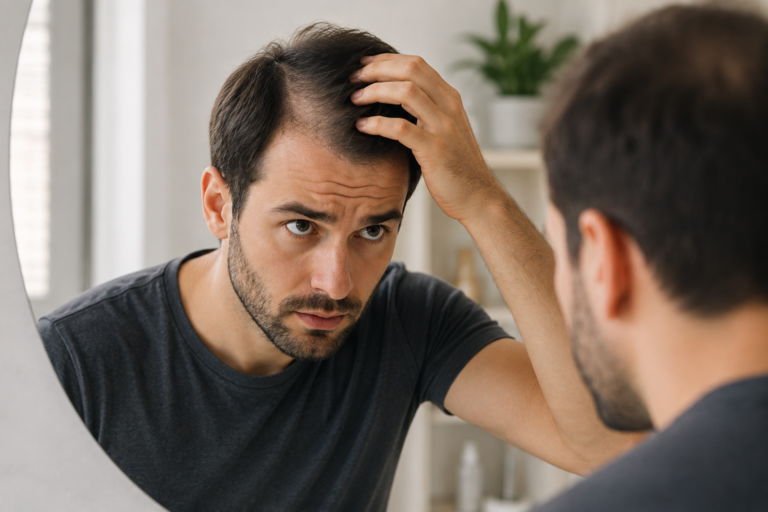
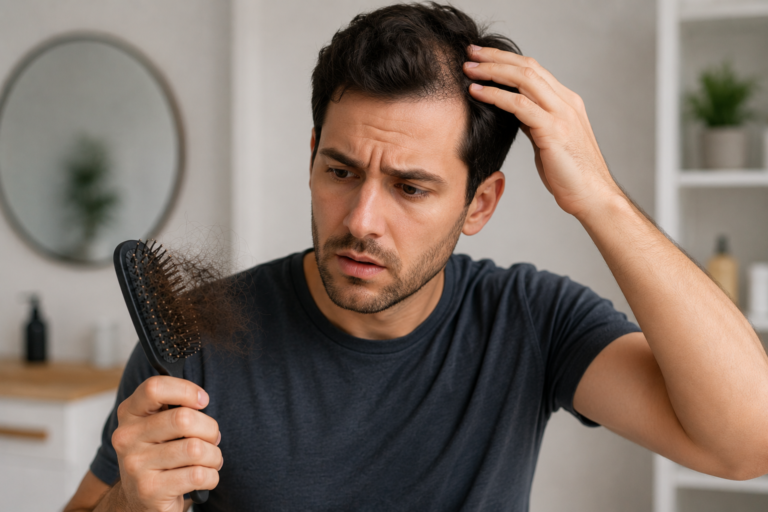
Many women first notice extra hair in the shower or on their hairbrush before visible thinning appears.
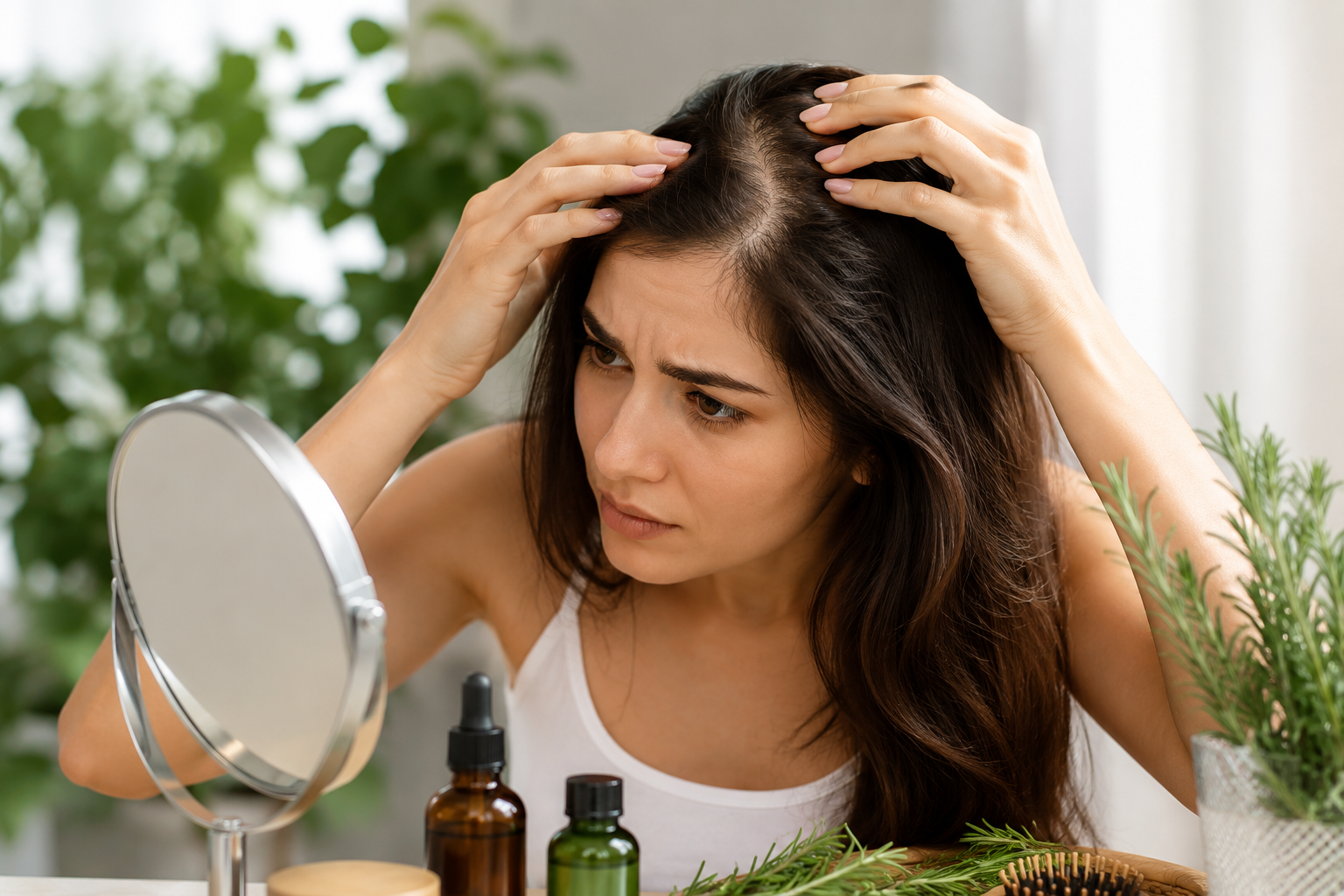
Widening Part Line
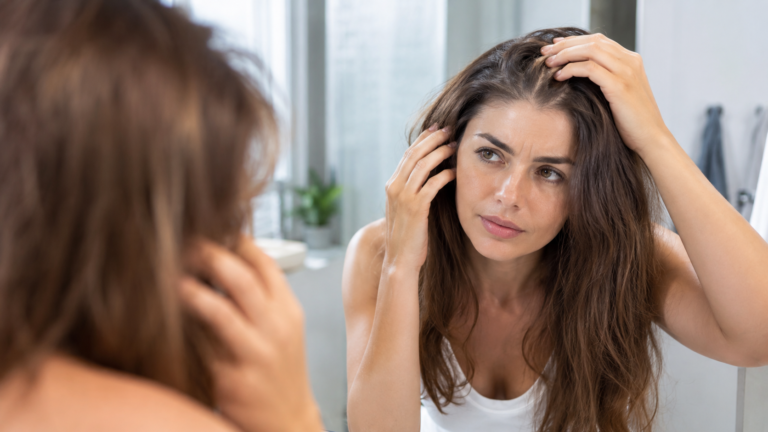
One of the earliest signs is a widening hair part.
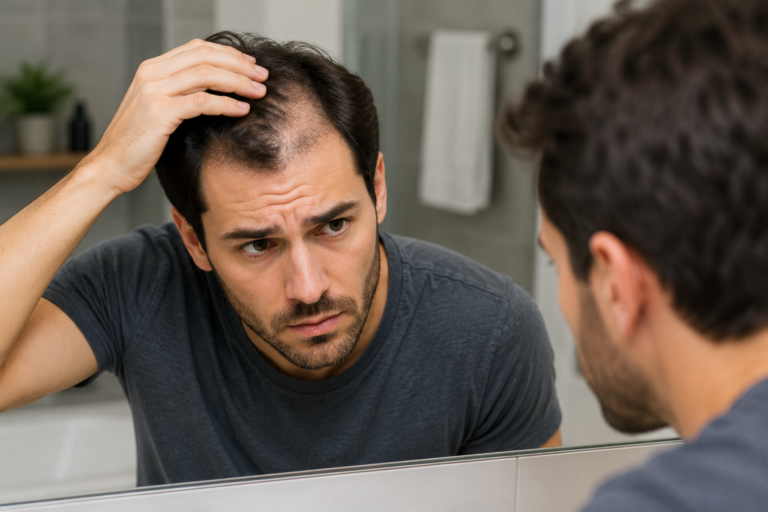
The scalp becomes more visible as hair density decreases.
Diffuse Thinning
Instead of bald patches, hormonal hair loss often causes thinning across the top of the scalp while preserving the frontal hairline.
Increased Daily Shedding
Losing 50–100 hairs per day is normal.
However, persistent shedding beyond this may indicate an underlying hormonal imbalance.
Slower Hair Growth
Many women notice their hair grows more slowly and feels finer than before.
Natural Ways to Support Hormonal Hair Loss
Although hormonal hair loss may require medical evaluation, healthy lifestyle changes can support stronger hair growth.
Eat More Protein
Hair is primarily made of keratin, a protein that requires adequate dietary intake.
Lean meat, eggs, fish, legumes, and dairy products may support healthier hair.
Increase Iron Intake
Iron deficiency is common among women and may worsen hair shedding.
A balanced diet or supplementation under medical supervision may help.
Reduce Stress
Chronic stress increases cortisol levels, which can interfere with the normal hair growth cycle.
Exercise, meditation, and quality sleep may help reduce stress hormones.
Improve Scalp Health
Keeping the scalp clean and healthy may improve the environment around hair follicles.
Gentle scalp massage may also support circulation.
Medical Treatments That May Help
Treatment depends on the underlying hormonal imbalance.
Healthcare professionals may recommend different approaches based on the diagnosis.
Minoxidil
Topical minoxidil is one of the most widely studied treatments for female pattern hair loss.
It may help stimulate hair follicles and prolong the growth phase.
Hormonal Therapy
Some women with elevated androgen levels may benefit from hormone-regulating medications prescribed by their doctor.
Nutritional Supplementation
Correcting deficiencies in iron, vitamin D, zinc, or other nutrients may improve hair growth if deficiencies are present.
Treat Underlying Conditions
Managing thyroid disease, polycystic ovary syndrome (PCOS), or menopause-related hormonal changes may reduce excessive shedding.
Lifestyle Habits That Support Healthy Hair
Daily habits have a major impact on long-term hair health.
Simple changes may improve overall hair quality.
- Eat a balanced diet rich in vitamins and minerals.
- Avoid smoking.
- Limit excessive heat styling.
- Avoid tight hairstyles that pull on the scalp.
- Sleep at least seven hours per night.
- Stay physically active.
- Drink enough water daily.
Consistency often matters more than expensive treatments.
Frequently Asked Questions (FAQ)
Which hormone is most responsible for female hair loss?
Dihydrotestosterone (DHT) is the hormone most commonly linked to female pattern hair loss. Women naturally produce small amounts of DHT, but sensitive hair follicles may gradually shrink when exposed to it.
Can estrogen deficiency cause hair loss?
Yes. Falling estrogen levels during menopause or after childbirth may shorten the hair growth cycle and increase shedding.
Can thyroid hormones affect hair growth?
Absolutely. Both hypothyroidism and hyperthyroidism may cause diffuse hair thinning across the scalp if left untreated.
Can hormonal hair loss be reversed?
Hormonal hair loss may improve if the underlying imbalance is identified and treated early. Nutrition, scalp care, medication, and healthy lifestyle habits may all contribute to better outcomes.
What vitamins help hormonal hair loss?
Iron, vitamin D, zinc, biotin, and vitamin B12 may support healthy hair growth when deficiencies are present.
Should women see a doctor for sudden hair loss?
Yes. Sudden or severe hair loss should always be evaluated by a healthcare professional to identify possible hormonal or medical causes.
Conclusion
Understanding which hormone causes hair loss in females is the first step toward finding an effective solution.
Although DHT plays the biggest role in female pattern hair loss, changes in estrogen, thyroid hormones, cortisol, and insulin can also contribute to thinning hair.
Early diagnosis, proper nutrition, healthy lifestyle habits, and evidence-based treatments may help slow hair loss and support stronger, healthier-looking hair over time.
Instead of relying on miracle cures, focus on consistent care and scientifically supported solutions for the best long-term results.
Medical Disclaimer
This article is for educational purposes only and should not be considered medical advice. Hormonal hair loss may be associated with underlying medical conditions that require professional diagnosis and treatment. Always consult a qualified healthcare provider or dermatologist before starting supplements, herbal remedies, or medications.